The federal government intends to introduce compulsory examinations for senior secondary school students, as the National Assembly moves to amend the National Senior Secondary Education Commission Act, signalling a major shift in the administration of Nigeria’s secondary education.
The Federal Ministry of Education recently announced national guidelines on mandatory participation in an approved senior secondary school qualifying examination, which mandates that students must sit the West African Examinations Council (WAEC), the National Examinations Council (NECO), the National Business and Technical Examinations Board (NABTEB), and the National Board for Arabic and Islamic Studies (NBAIS).
“This guideline, which takes effect from the 2027 academic year, is aimed at establishing a uniform national framework for the certification and quality assurance of students completing senior secondary education in Nigeria and to preserve national educational standards, ensure curricular alignment, and maintain robust data tracking,” the statement read.
The ministry emphasised that the senior secondary school education in Nigeria is intended to prepare learners for further education, employment, entrepreneurship, responsible citizenship and lifelong learning.
“At the end of senior secondary education, Nigerian students who have been educated within the Nigerian education system are subjected to Nigerian terminal assessment to obtain evidence of completion and academic achievement through recognised examinations conducted by approved examination bodies,” it noted.
Consequently, from 2027, the Federal Ministry of Education wants to force every private and international secondary school in Nigeria to make students sit for WAEC, NECO or other approved Nigerian examinations, even when those students are already pursuing internationally recognised qualifications.
Alex Onyia, the chief executive officer at EDUCARE, however, expressed concerns that Nigeria is moving rather backwards with this policy.
“Instead of urgently modernising our outdated curriculum, fixing dilapidated public schools, building functional science laboratories, training teachers and introducing globally competitive learning standards, we are busy creating policies that threaten educational innovation.
“Why are we more interested in forcing successful schools to conform than in raising the standards of failing schools? The world is moving towards artificial intelligence, robotics, critical thinking, practical skills and competency-based education. Yet we are obsessed with forcing everyone into the same examination system,” he said.
Ikeh Chilaka, an education consultant, thinks the move would help students perfect their course of study, but urges the government to be flexible with the rule.
Read also: ProvidusUnity Bank prepares over 100 entrepreneurs for sustainable growth
“It makes for perfection in the course of study; however, I think students should choose their course and time to write their exams,” he noted.
However, Olu Victor said it is an embarrassment to Nigeria for an educational institution operating under the Nigerian education system not to offer terminal examinations recognised by the country, and insists such should have been stopped long ago.
“Any institution operating in Nigeria must comply with its educational standards. If it prefers another country’s examination system, it should operate there.
“So long as you agree to operate in Nigeria, Nigerian curricula must be taught and assessed through examination bodies approved by Nigeria.
Alternatively, students may sit both local and international examinations, but the Nigerian examination must be compulsory,” he emphasised.
Meanwhile, the Nigerian Senate has passed the bill to amend the National Senior Secondary Education Commission Act No. 45, 2023, a major executive bill seeking to overhaul the administration and coordination of public senior secondary education in Nigeria.
This is expected to establish a clearer operational framework between the National Senior Secondary Education Commission (NSSEC), state ministries of education, and state senior secondary education boards. Besides, it seeks to resolve longstanding policy misalignments and uneven implementation across the 36 states and the Federal Capital Territory (FCT).
Related News
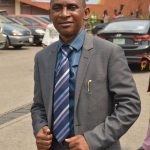
Charles Ogwo is a proactive journalist, driving education, and business innovations for over 10 years.
He leads initiatives leveraging tech to enhance storytelling and build topnotch performing team.
Charles is passionate about harnessing technology to inform, engage and empower communities.

Source: