The next time a point-of-sale (PoS) agent asks for a bank card, inserting it may not be necessary. Some Nigerian cards can already complete transactions with a single tap.
TechCabal tested this at a local PoS merchant. Using a Verve debit card issued through ALAT, the digital banking platform of tier-2 Nigerian lender Wema Bank, the team held the card near the terminal instead of inserting it. The machine recognised the card, requested a PIN, and dispensed ₦1,500 ($1.11) from the ₦1,600 ($1.19) transaction, which included a ₦100 ($0.074) merchant fee. The cash withdrawal went through without the card being inserted into the machine.
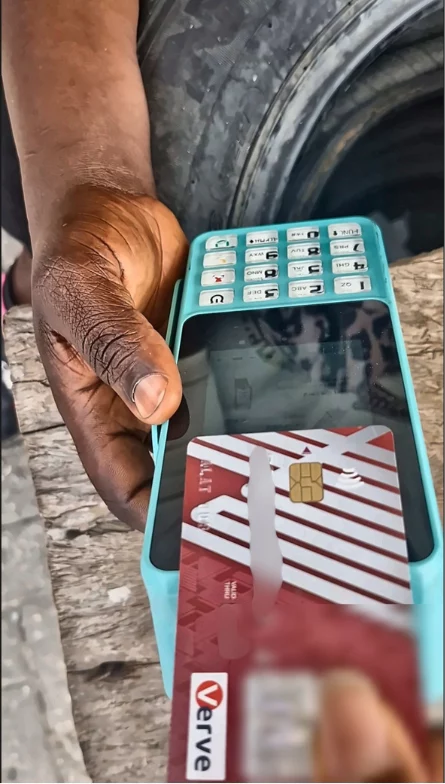
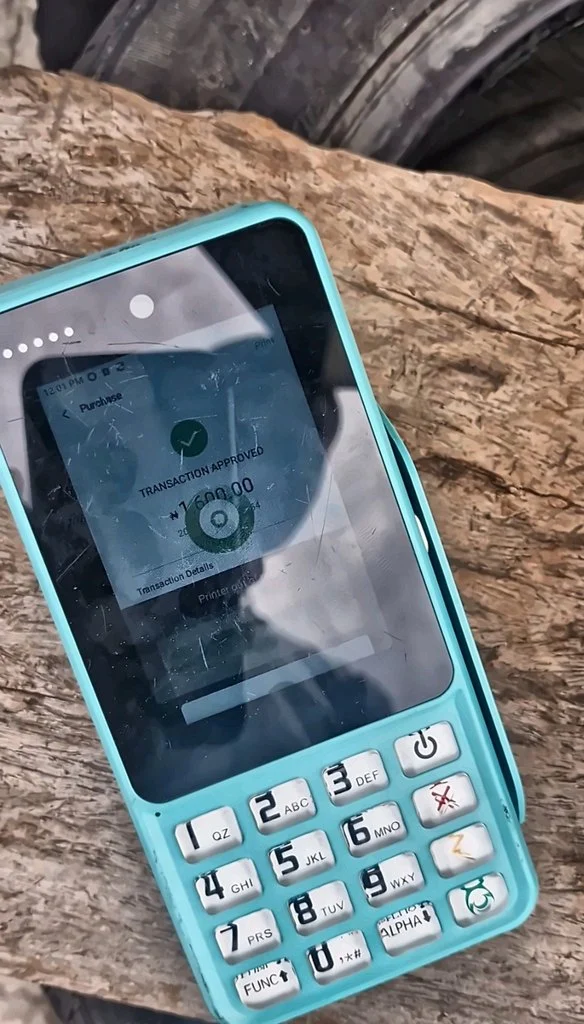
It was a small transaction, but it demonstrated a payment capability already available on some Nigerian cards and PoS terminals, yet still unfamiliar to many consumers.
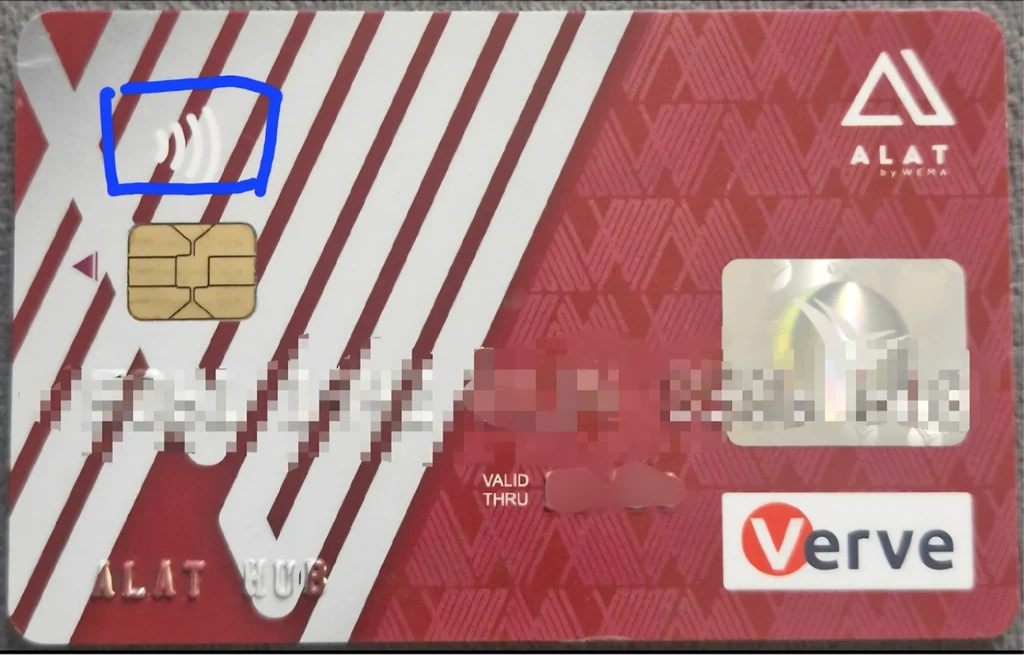
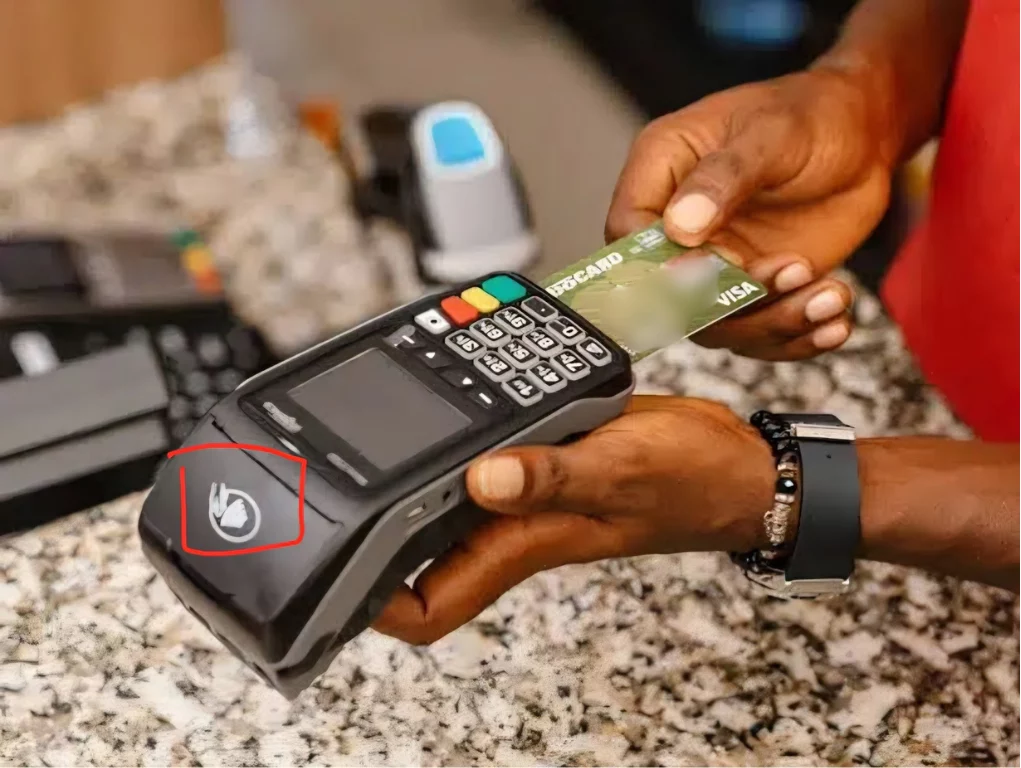
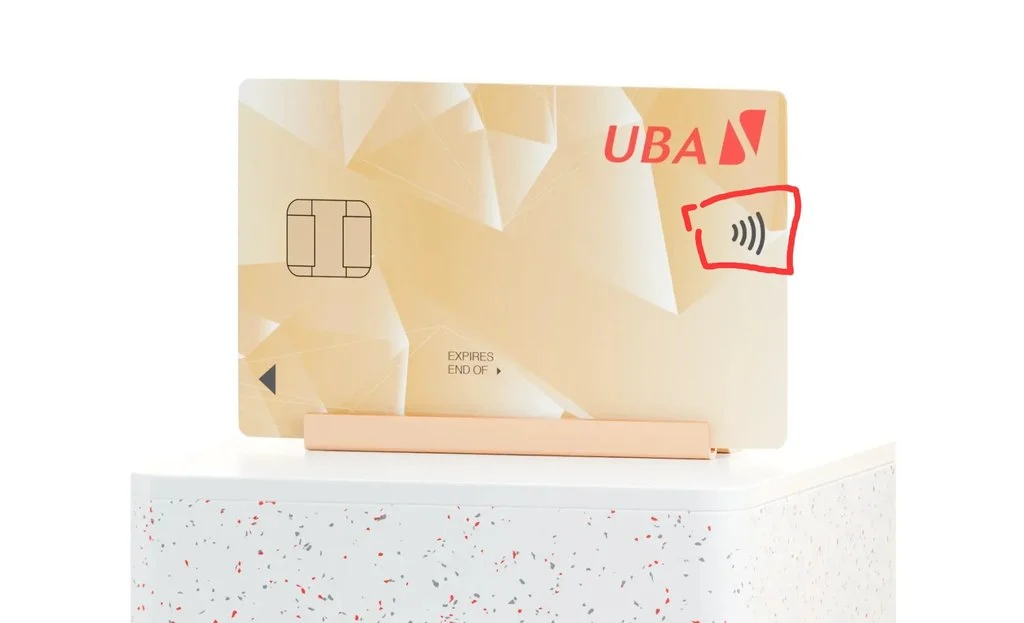
The feature is easier to spot than it may seem. Look for a small contactless symbol on the card or PoS terminal: four curved lines that resemble radio waves. The symbol is often mistaken for the Wi-Fi logo, but it signals something different. On a card, it means the card can make contactless payments; on a terminal, it means the machine can accept them. The tap works through Near Field Communication (NFC), a technology that lets devices exchange data when they are close to each other.
Contactless payments are not new to Nigeria. In May 2015, Unified Payments, a Nigerian payment processing company, introduced a Near Field Communication (NFC) payment solution.
In September 2022, global payments company Mastercard, Nigerian commercial bank Providus Bank, French digital security company Thales, and African payments technology company Interswitch launched tokenised tap-to-pay solutions for smartphones and wearables, following nine months of development.
Now, Google Pay’s October 2026 market entry and a growing number of homegrown fintech solutions are drawing renewed attention to a technology that has been in use in Nigeria for more than a decade.
These developments could expand how Nigerians pay and receive money. Customers can use compatible smartphones instead of physical cards, while merchants can turn NFC-enabled smartphones into payment terminals. Other companies are exploring contactless payments linked to bank accounts and digital wallets. But wider adoption will depend on whether banks, merchants, and consumers can make the technology work in everyday transactions.
From contactless cards to Google Pay
The most visible development in Nigeria’s contactless payments market came on October 28, when Mastercard and Interswitch announced that eligible Mastercard holders could use Google Pay to make contactless payments with compatible Android devices.
The launch, announced at the 2026 edition of Moonshot by TechCabal, lets customers add supported Mastercard cards to Google Wallet and pay at merchants with compatible contactless terminals using their phones. Instead of presenting a physical card, customers authenticate on their phone and hold it close to the PoS terminal.
The partnership brings together three different parts of the payment experience. Google provides the digital wallet through which customers store and access their payment credentials. Mastercard provides the card network and tokenisation infrastructure, while Interswitch connects participating card issuers to the processing and tokenisation capabilities required for the service to work.
The innovation lies in turning regular NFC-enabled smartphones into payment devices while existing card networks continue to handle the transactions.
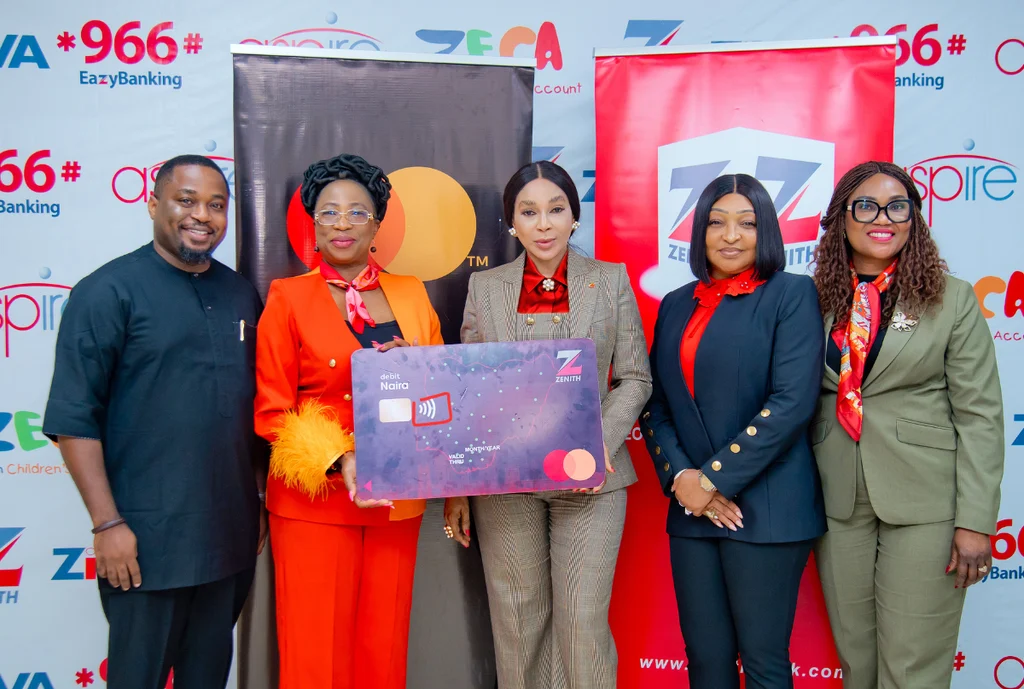
Interswitch is working with five Nigerian banks—GTBank, Wema Bank, ProvidusUnity Bank, Zenith Bank, and FirstBank—to expand tokenised payments across digital wallets and banking apps. But the partnership does not give every customer of those banks immediate access to Google Pay. Google’s published list currently supports selected cards from FirstBank, GTBank, Providus Bank, UBA, and Zenith Bank.
Wema Bank, despite its involvement in Interswitch’s initiative, is absent from that list. So are Verve and AfriGO cards. Even customers with eligible cards still need NFC-enabled Android phones and merchants with compatible contactless terminals. The rollout exposes a gap between the institutions building Nigeria’s tap-to-pay infrastructure and the customers who can use it today.
Once users have added and verified an eligible card on an NFC-enabled smartphone, they can tap at a local PoS terminal to make payments. For merchants, however, accepting contactless payments requires more than an NFC-enabled terminal. Acquiring banks and payment processors must support the transaction, and the terminal must recognise the customer’s card network or digital wallet. A PoS machine can carry the contactless symbol and still reject certain payment methods.
Nigerian fintech companies are also working to expand where customers can tap and what they can tap with. CashAfrica, a payments startup, has introduced a contactless mobile payment service in partnership with the fast-food chain Chicken Republic. Nearpays, another Nigerian payments startup, is developing software that allows merchants to accept contactless payments directly on compatible smartphones.
Nearpays uses software-based point-of-sale technology (SoftPOS) to turn an NFC-enabled Android phone into a payment terminal. A merchant enters an amount in the Nearpays application, and the customer taps a contactless card or supported device against the phone. The software initiates the transaction through the payment processing system.
“We’ve built a product that sits as a mediator and can communicate easily to both parties,” Nearpays founder and chief executive officer Victor Daniyan told TechCabal.
According to Daniyan, Nearpays routes domestic card transactions through the Nigeria Inter-Bank Settlement System (NIBSS), the country’s payment switch, and international card transactions through Visa, with banking partners involved in processing.
The model could reduce one of the costs of accepting card payments: PoS hardware. Merchants with compatible smartphones may be able to accept payments without acquiring another device, although processing fees, security requirements, and settlement arrangements still apply. Its commercial appeal will depend on whether those savings outweigh the costs of using the service.
The approach has gained ground beyond Nigeria. In 2025, Visa, the global payments giant, said its Tap to Phone technology processed over $33 billion in payments, underscoring the scale of smartphone-based acceptance in other markets. But those figures offer no guarantee of similar adoption in Nigeria, where merchants and customers already have a familiar alternative in bank transfers.
Together, Google Pay, CashAfrica, and Nearpays show how companies are expanding contactless payments from both ends of a transaction. They are changing the devices customers use to pay, and the equipment merchants need to accept payment.
However, underneath those interactions, payment credentials still need to reach financial institutions securely, without unnecessarily exposing sensitive account or card information.
What tokenisation changes, and what it does not
A phone can imitate a payment card without storing or transmitting the card’s original number during each transaction. That is one of the advantages of tokenisation, the security technology underpinning services such as Google Pay, the newly launched product in Nigeria.
When a customer pays with Google Pay, the phone does not need to share the original card number with the merchant. Instead, it uses a digital stand-in for the card. That is essentially what tokenisation does.
Think of it as giving someone a spare key that works only under certain conditions, while keeping the original key safe. The token represents the customer’s card, but it cannot be used in all the same ways as the card number it replaces.
When a customer adds an eligible Mastercard to Google Wallet, the bank verifies the card, and Mastercard’s Digital Enablement Service (MDES) helps create a token linked to the phone. Each payment also carries a unique security code, called a “cryptogram,” which helps the payment network check that the transaction is authentic. The code changes with each transaction, making captured payment information harder to reuse.
If the phone goes missing, the bank or wallet provider can disable its token without necessarily cancelling the physical card.
Tokenisation works alongside NFC, but the two do different jobs. NFC lets the phone and PoS terminal exchange information when they are close together. Tokenisation helps keep the customer’s original card details out of that exchange. Banks and payment networks still check and approve the transaction before money moves.
Not every contactless card uses the same token system as Google Wallet. Tokenisation also protects online payments, where customers do not tap anything.
For Nigerian payment companies, the greater opportunity may lie in expanding contactless payments beyond card networks.
Bank transfers already dominate much of Nigeria’s digital payment activity. In its Payments System Vision 2028 (PSV 2028) strategy document released in June, the Central Bank of Nigeria (CBN) said that web and Internet transfers accounted for 51.9% of retail non-cash transaction volumes as of June 2024, compared with 28.5% for PoS transactions.
Nigerians have become accustomed to paying directly from their accounts, creating a commercial challenge for any product that asks them to adopt another payment method.
CashAfrica is attempting to build on that behaviour by developing account-based tokenisation. Rather than requiring a customer to hold a physical card, the company said it can create a digital identifier (a token) linked to a bank or fintech account and use it to initiate contactless payments.
Malik Asamu, the company’s founder and chief executive officer, argued that the opportunity lies in adapting contactless infrastructure to a market where consumers are more accustomed to using accounts than cards.
“If we can build an innovation that allows us to tokenise accounts, like we do cards, that then means that you can tokenise an account in the same model that you tokenise a card,” Asamu told TechCabal.
CashAfrica’s approach differs from Mastercard’s card-tokenisation model. Mastercard substitutes a card credential that already operates on its payment network. The fintech aims to make account balances accessible via a contactless payment experience, which requires identifying the account, authenticating the customer, and initiating a transaction through participating financial institutions.
The payment journey Asamu described, however, still involves an intermediary wallet. Customers first transfer money in the CashAfrica Cash Mobile app, select “Tap to Pay,” authenticate with a PIN or biometrics, and tap a compatible merchant terminal.
That introduces a commercial hurdle. A customer who already has money in a bank account must move it into another wallet before paying. For someone accustomed to making an instant transfer from a banking app, the additional step could offset the convenience of tapping a phone.
CashAfrica’s longer-term ambition is to make contactless payments available through existing banking and fintech applications.
Tokenisation protects card details, but it cannot prevent all forms of payment fraud. EMVCo, the international body that sets payment technology standards, said the technology limits what criminals can do with stolen card information.
However, in Nigeria, fraud increasingly relies on tricking customers into revealing sensitive information or gaining unauthorised access to their accounts. According to NIBSS, financial institutions lost ₦25.85 billion ($19.2 million) to digital payment fraud in 2025, even as losses fell by 51% from the previous year.
NIBSS noted that social engineering, account compromise, SIM-swap fraud, and phishing are among the industry’s biggest threats. A token can protect a card number, but it cannot stop a customer from being tricked into approving a fraudulent payment.
Regulation introduces another constraint. Under the CBN’s June 2023 rules, contactless payments through accounts and wallets can proceed without additional verification up to ₦15,000 ($11.14) per transaction and ₦50,000 ($37.14) cumulatively per day. Higher-value transactions require appropriate verification and authorisation, with further restrictions applying above the daily threshold.
Tokenisation can make digital payment credentials safer to use across devices. But it cannot, on its own, make banks integrate with new payment services, persuade merchants to accept them, or convince customers to abandon payment methods they already know and trust.
Will more Nigerians tap?
Nigeria’s digital payments market continues to expand. In 2025, the CBN said that electronic payment transaction volumes rose by 2.6% to 47.88 billion, up from 46.65 billion the previous year. The value of these transactions increased by 26.1% to ₦4.36 quadrillion ($3.28 trillion), from ₦3.46 quadrillion ($2.6 trillion) in 2024.
Nigeria’s growing digital payments market gives contactless providers a large customer base to potentially convert, but not necessarily a ready market. Bank transfers already allow customers to pay merchants directly from their accounts, often without a card or PoS terminal. A tap—whether using smartphones, cards, or other wearables—must offer a noticeable advantage in speed, convenience, or reliability to change that behaviour.
The United Kingdom offers an example of how that shift can happen. Contactless payments accounted for just 3% of all UK transactions in 2015. A decade later, they accounted for 39% of payments, with 19.2 billion recorded in 2025, according to UK Finance.
Years of investment in everyday acceptance underpinned much of the growth that contactless payments experienced in the UK. In 2012, London’s transport authority introduced contactless bank card payments on buses and extended them to the Underground and rail network in 2014.
Commuters could pay fares using cards they already owned, without obtaining a separate travel card, and benefit from the same fares and daily caps available through the Oyster system. By 2017, passengers had made more than one billion contactless journeys across London’s public transport network.
The wider banking industry also made the technology easier to use. Banks issued more contactless cards, merchants installed compatible terminals, and payment limits increased to accommodate more purchases. By the end of 2024, 89% of cards in circulation in the UK supported contactless payments, according to UK Finance.
The UK example suggests that adoption depends on giving customers frequent opportunities to tap, without requiring them to change how they hold or access their money. Public transport helped establish the habit, while widespread card issuance and merchant acceptance brought the technology into everyday shopping.
Nigeria already has its own example of contactless payments becoming routine. In Lagos, commuters use Cowry cards to tap onto regulated buses, trains, and ferries. Touch and Pay, the fintech operating the system, said it had surpassed five million users by 2025 and reported processing over ₦20 billion ($14.9 million) in transactions in 2024.
But Cowry operates through a dedicated transport payment system: commuters either load funds onto a physical card and tap it at transport terminals, or fund their Cowry account and pay using the app’s quick response (QR) code scanner. Participating transport operators accept both methods.
Extending contactless payments across ordinary retail transactions presents a different challenge because banks, card networks, and merchants must support compatible payment methods.
Google Pay, CashAfrica, and Nearpays are attempting to bring contactless payments into everyday transactions, but wider acceptance alone may not be enough to persuade Nigerians to change how they pay.
Nearpays’ proposition is partly about the merchant. The fintech’s solution lets NFC-enabled smartphones accept contactless payments without a hardware PoS terminal, potentially lowering the barrier to entry for businesses that want to accept card payments.
But the benefit to customers is less clear-cut. In our ₦1,500 ($1.11) withdrawal test, tapping the Verve card eliminated the need to insert it into the terminal, but the transaction still required a PIN.
Yet, for tap-to-pay to gain ground beyond transport and become commonplace in retail payments, security cannot be compromised in pursuit of convenience, especially at its current early stage of adoption.
With the speed advantage potentially amounting to mere fractions of a second over existing digital payment methods, and authentication still required in some cases, tapping may struggle to offer Nigerians a compelling reason to change how they pay. Without a clearer advantage, it risks remaining just another cool way to make a payment.
Source: