Four friends funded an e-hailing app with proceeds from their property-maintenance business—and now they want South African drivers to keep 100% of their fares. With 30,000+ registered drivers, Bro Cabs is betting subscriptions can beat Uber and Bolt’s commission model. In this week’s Coffee With…, PHATHISANI MOYO speaks to the founders.
The first version of Bro Cabs, a commission-free e-hailing platform for drivers, was not financed by a venture capital firm or a large technology investor. It was paid for by a property-maintenance business run by four friends who decided that if they wanted to build something of their own, they would have to find a way to fund it themselves.
They put some of the business’s proceeds towards developers, equipment and the work needed to turn an idea into a functioning e-hailing application. They could not afford every service upfront, but built relationships with people willing to help them get the product off the ground.
“We didn’t want to do things the conventional way,” Persy Qamata, Bro Cabs’ chief executive officer (CEO), told TechCabal in an interview on Monday. “We weren’t going to allow a lack of financing to prevent us from getting a minimum viable product (MVP) off the ground.”
The four founders, chief operating officer Msizi Mtolo, Qamata, chief marketing officer Cebile Magudulela and chief strategy officer Luther Mfetane, were entering an industry dominated by larger, established platforms.
But they were not simply trying to build another e-hailing application. They wanted to change how drivers pay for access to these platforms and how much of each fare they get to keep.
Bro Cabs uses a subscription model. Instead of taking a percentage of every trip, it charges drivers a fee to use the platform, allowing them to retain the full fare. The proposition is straightforward. Building a business around it is not. The founders must attract drivers and passengers, secure capital to compete with established operators and prove that subscriptions can sustain a growing business.
An idea shaped by the driver’s seat
The thinking behind Bro Cabs was sharpened by Mtolo’s experience after moving from KwaZulu-Natal to Johannesburg.
Before the company took shape, he worked in the rental-car industry and took several e-hailing trips a day. According to an account Qamata shared in a separate interview, this exposed Mtolo to the commissions charged by existing platforms and their effect on drivers’ earnings.
The fare displayed on an application is not necessarily what reaches a driver’s pocket. Fuel, maintenance and insurance all have to be paid, with platform commission taking another portion.
Mtolo’s experience helped the founders identify a problem they believed they could address. The group had already been working on a web-development project for small and medium-sized businesses. They initially planned to use those skills to develop an application for the taxi industry, but encountered resistance and redirected their efforts towards e-hailing.
Qamata says the group chose to enter an established industry and solve a problem they could see within it. Bro Cabs emerged from the idea that drivers should not have to surrender a percentage of every fare to access customers.
Building before asking for money
The property-maintenance business gave the founders a practical starting point. They wanted to show investors a product people could use, rather than an idea that existed only in a presentation.
They began with a minimum viable product, less sophisticated than the application they have today but functional enough for drivers and passengers to test.
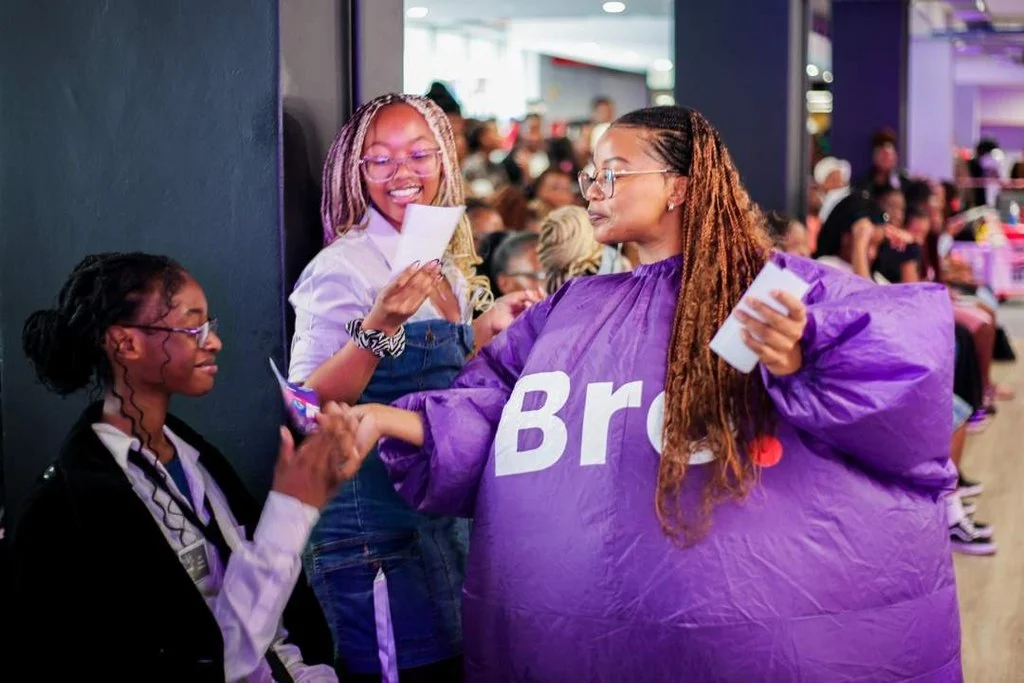
“We understood that before approaching angel investors, we needed to demonstrate that the business was worth investing in,” Magudulela said. “We needed a working product and customers.”
They concentrated on Johannesburg and initially targeted a specific market, including students. They wanted to learn how people used the application and where it could find its first customers.
Early progress depended as much on relationships as technology. Developers worked with them despite the company’s limited resources, while drivers frustrated with established platforms were open to an alternative. Some supporters put Bros Cabs stickers on their vehicles.
The platform began a pilot in Braamfontein, central Johannesburg, in July 2025. The founders initially aimed to register 50 drivers and 100 commuters. Qamata said that within two months they had signed up 710 drivers and 1,150 commuters. The company opened the platform to the public in November 2025.
A different way to pay for a ride
The subscription model is the clearest expression of what the founders want to change.
Traditional e-hailing platforms generally charge drivers a commission on completed trips. Bro Cabs takes a different approach, charging drivers a subscription fee to access the platform while allowing them to keep 100% of their fares. Its published options have included R30 ($1.81) a day, R150 ($9.04) a week and R600 ($36.14) a month.
Qamata says the approach was influenced partly by Namma Yatri, an Indian mobility platform that has demonstrated an alternative to conventional commission-based e-hailing.
“We were introducing something new,” he said. “We hadn’t seen a model in Africa where drivers paid upfront to use an e-hailing platform while retaining 100% of their earnings.”
That difference also raises questions for investors: will enough drivers pay a subscription, will the platform attract passengers, and can recurring income cover the costs of expansion?
The founders argue that drivers should be able to keep more of the money they generate. Magudulela links the issue to the households that depend on driving income.
“Remember, we’re talking about driver earnings. When drivers earn more, their families benefit,” he said. “There are many households that depend on the income generated through driving.”
A Bolt-commissioned Ipsos study published in April 2026 found that 70% of surveyed South African gig workers used ride-hailing to supplement other earnings, while 30% relied on it as their primary source of income. The survey covered 250 respondents across several types of gig work, not e-hailing drivers alone.
Bro Cabs says it wants to reach both groups, including people who own vehicles but are not yet part of the e-hailing market and those with other jobs who want to earn additional income from their cars.
The work of building a market
A subscription may appeal to drivers, but it does not automatically bring passengers. Drivers need customers to make the fee worthwhile, while passengers need enough available cars to trust the service. Building both sides requires sustained investment.
Bro Cabs has tried to address this through driver associations and local partnerships. Mfentane said the founders have developed business-to-business relationships alongside the consumer-facing service.
The company is focusing on particular areas, including Pretoria and Rosebank, where it says it has established relationships that can support adoption.
Magudulela said the strategy is to build a presence where there is already a network of potential users, rather than sign up drivers across the country without knowing where demand exists.
“It’s better to concentrate on areas where partnerships are already in place,” stated the chief marketing officer. “We have the partnerships. What we need now is the funding to drive adoption.”
That means marketing and referral incentives. Magudulela says the company wants to use platforms such as TikTok and reward existing users for bringing new drivers and commuters onto the platform.
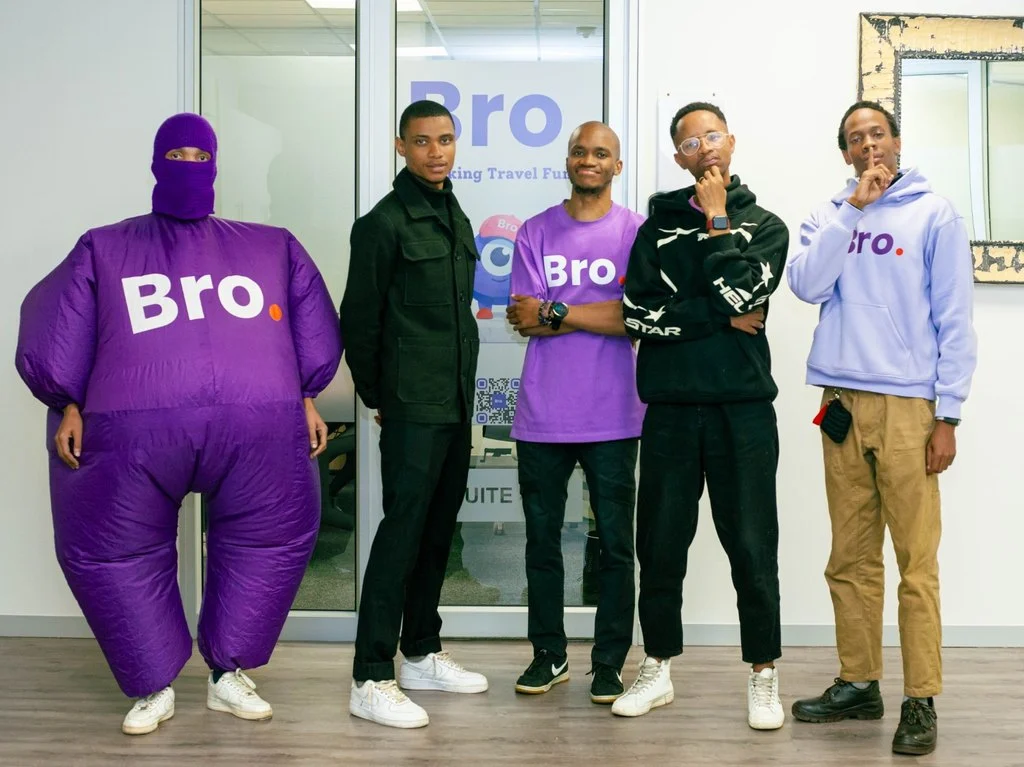
The founders cited over 30 000 registered drivers and over 20 000 registered riders, while the company said seven to eight people were working in its operation.
The company says it has also used partnerships with driver associations to accelerate expansion. In new markets such as Durban and Pretoria, Bro Cabs has offered 500 drivers free access to the platform, specifically targeting those joining through associations.
Convincing investors to come along
The founders said their first external investor provided a relatively small amount of capital and wanted to see how they managed it before committing more. They responded by tracking expenditure closely and explaining where the money was going, including marketing costs.
The reception from venture capital firms has been more difficult. Magudulela believes investors often look at the established position of e-hailing companies such as Uber and question how a smaller competitor can build enough scale to challenge them.
The subscription model raises further questions about growth and retention. A platform charging a recurring fee must convince drivers that its service will generate enough trips to justify the payment.
“They tend to look at the potential return on investment,” Magudulela said. “If they put in R10 million ($602,000) today, how long will it take to generate a meaningful return?”
Luther Mfetane, chief strategy officer, described the experience of building a business in a market where established players have far greater financial resources.
“Everyone has a plan for how they’re going to win a boxing match until they get into the ring and get hit,” he said.
The founders want funding to expand beyond their current regional footprint. Mfentane believes a $1 million investment would help accelerate national expansion, strengthen marketing and build on the partnerships they have developed.
His co-founder,Magudulela, sees customer acquisition as a priority. Established platforms can spend heavily on promotions and discounts, a level of spending Bros Cabs cannot yet match.
The company is confident that it could capture between 10% and 20% of the market with sufficient funding..
For now, the four friends are building one driver and one passenger at a time. The money from maintaining properties and the first angel investment helped get them started. They must now prove that a platform allowing drivers to keep the full fare can also keep the business running.
Source: