
It’s not a question of “if” but “how” Prime Minister Mark Carney will seek to deepen economic ties with China amidst a global reordering provoked by U.S. President Donald Trump, experts say.

Carney is set to meet with Chinese President Xi Jinping on Tuesday, the two leaders’ second meetings since Carney was elected in part on a promise to diversify Canadian trade away from the U.S.
China is a significant part of that strategy. After years of diplomatic hostilities — including China’s arrest and detention of Michael Kovrig and Michael Spavor — the Carney government signed a “strategic partnership” with Beijing to collaborate on energy and clean technology.
Deanna Horton, Canada’s former ambassador to Vietnam and a fellow at the Munk School of Global Affairs, said there’s a “great deal at stake” in the Canada-China relationship given the trade tensions with Trump’s administration.
Horton said despite the Democrats dramatic victory in this month’s midterm elections, she thinks it’s unlikely that Canada and the U.S. will return to the kind of tariff-free trade the two countries enjoyed in the past.
“We’re evolving into G2 world, the U.S. and China, and Canada needs to not have all its eggs in the U.S. basket,” Horton, who was also involved in the negotiations of the original North American Free Trade Agreement (NAFTA), said in an interview Monday.
“I don’t think we’re in a position now where we’re going to not want to deepen relations in China. I don’t think that is really an option for Canada. The question is: where do we place the emphasis in terms of improving relationships?”
Much of the attention around the meeting has been focused on Canada’s auto sector, already hurting from Trump’s trade war and bracing for higher tariffs in the new year.
In a January 2026 deal, Canada reduced its 100 per cent tariff on Chinese electric vehicles to 6.1 per cent and allowed up to 49,000 of the vehicles to be sold annually, with the cap increasing over time.

Get daily National news
Get daily Canada news delivered to your inbox so you’ll never miss the day’s top stories.
China agreed to lower tariffs on Canadian agricultural goods as a result.
Speaking to reporters in Cambodia Monday, Carney said that depending on what happens with U.S. trade talks, Canada could look elsewhere — including to China — to bolster its automotive industry.
“(Canada has) great autoworkers; important market, real assets in Canada. If they’re not fully utilized in a North American context, that provides other opportunities,” Carney said.
“Canada is going to move forward either way.”
Margaret McCuaig-Johnston, a senior fellow at the University of Ottawa and a leading expert on Canada-China relations, said Carney’s talk of greater Chinese involvement in the Canadian auto industry may be a bargaining move as talks with the U.S. stretch on.
“That, in my view, would be encouraging. If it’s a bargaining chip, it can be dropped,” McCuaig-Johnston said in an interview Monday.
“If it’s an offer to China to open up our manufacturing to them, that’s got a lot of concerns. They don’t want to use Canadian parts, they don’t want to follow Canadian labour standards … and they don’t want technology transfer (to Canadian companies).”
McCuaig-Johnston said those factors were the “guardrails” the federal government often talks about when it comes to protecting Canada’s auto sector while allowing greater Chinese investment.
And while Carney and the government talk about “guardrails” in other sectors — such as critical minerals and defence — McCuaig-Johnston said what those protections are is not exactly clear.
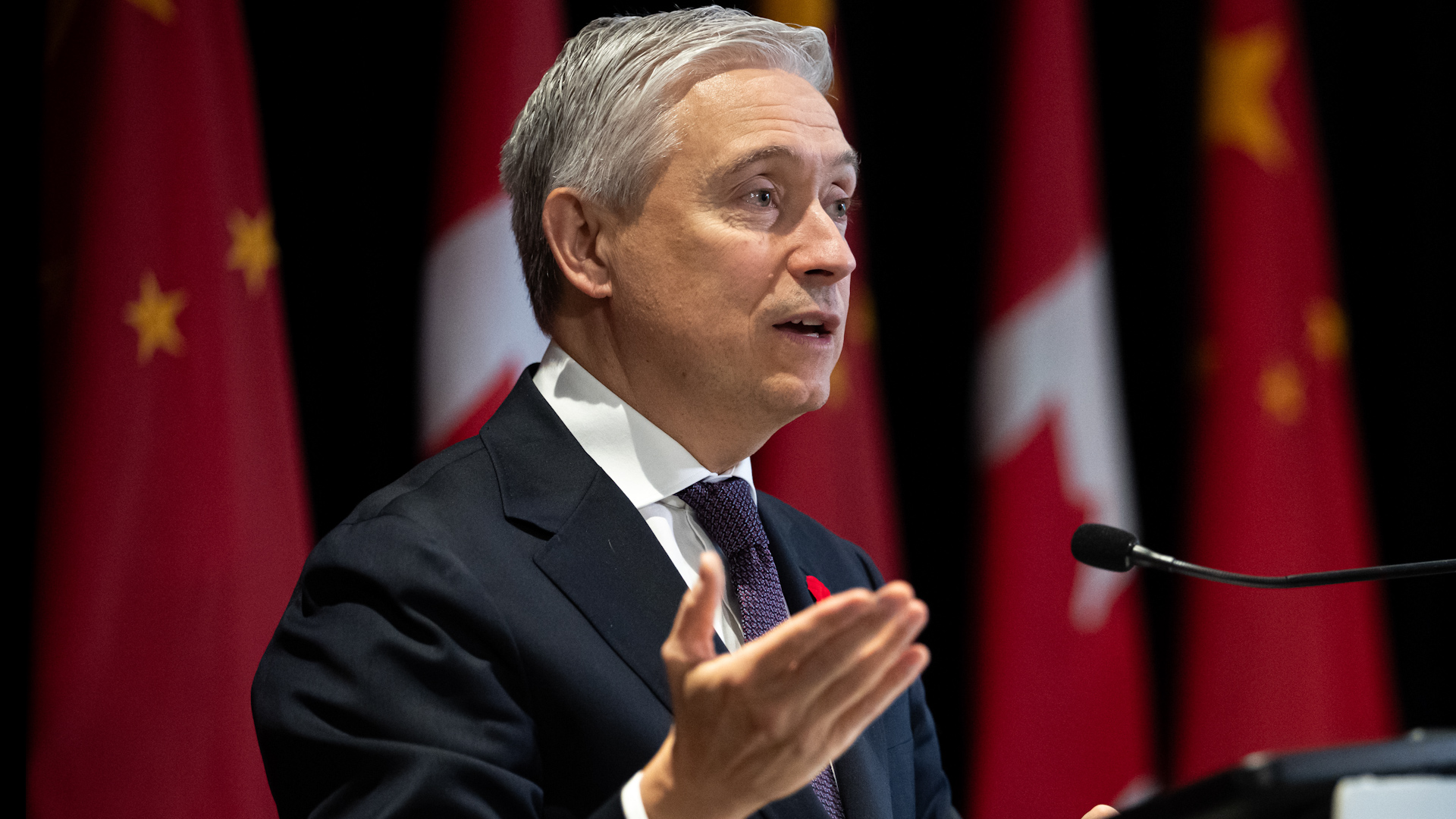
Beyond the economic relationship, Carney also said he would raise the issue of Chinese foreign interference in Canadian political affairs with Xi.
The Canadian intelligence community has repeatedly warned that China, among other countries, has attempted to covertly interfere in Canadian politics, as well as engage in transnational repression against Chinese diaspora groups living Canada.
Carney himself said just last year that China was one of the greatest threat to Canadian national security.
“The advantage of these meetings is you can raise these issues directly and frankly. And I will be raising the importance with which we attach to the non-interference in our affairs by China and other countries,” Carney told reporters earlier this month.
Another meeting at this week’s APEC summit could be of keen interest to Canada and its foreign policy — the planned trilateral meeting between Xi, Trump, and Russian President Vladimir Putin.
The meeting, which was proposed by Trump and accepted by Xi, is reportedly to discuss nuclear disarmament. The U.S. and Russia have the world’s largest stockpiles of nuclear weapons, and China has balked at talks of nuclear de-escalation.
China’s foreign ministry said on Monday that the meeting will be of “groundbreaking significance” and will promote peace and stability.
With files from the Associated Press and Reuters.
© 2026 Global News, a division of Corus Entertainment Inc.
Source: