Nigeria’s internet usage is rising faster than telecom operators can keep up, even as the digital economy booms.
Recent industry data shows that Nigerians consumed 1.731 million terabytes of data in September 2026. According to the NCC, monthly mobile data consumption increased more than threefold, from 518,000 terabytes in January 2023 to 1.66 million terabytes in July 2026.
While internet penetration and data revenue are increasing, the quality of experience keeps dropping, which makes an average Nigerian struggle to have a good internet connection when speed drops, mostly in congested locations or at night.
As the Nigerian Communications Commission (NCC) consultation paper on the Incentive-Based Spectrum Investment Framework (IBSIF) notes, current network infrastructure is struggling to keep pace. The regulator wants the framework to provide a structured approach for linking appropriate spectrum-related incentives to additional, verifiable infrastructure investment.
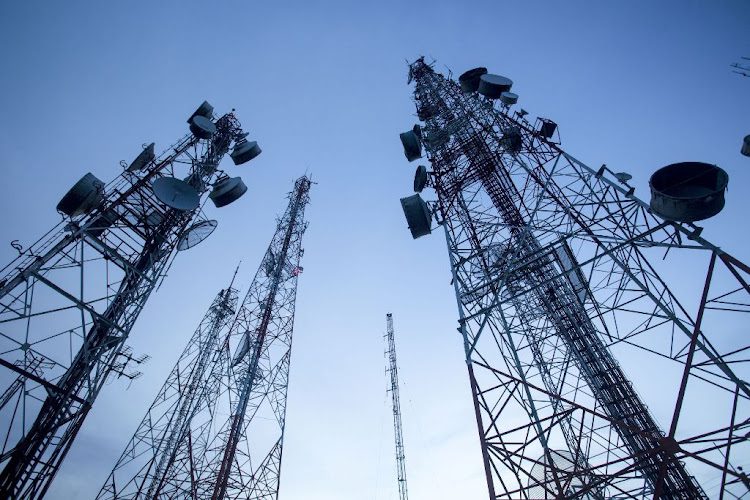
With 5G population coverage still at just 13% as of April 2026 and its network share at 5% (as of September 2026), urban centres are battling chronic network congestion, while rural and unserved communities are served with service that falls below appropriate coverage, capacity and quality thresholds.
Also read: Nigeria’s 5G market share hits 5% as 3G continues to decline.
However, linking spectrum incentives to verifiable infrastructure rollouts appears logical on paper. But in a real sense, the IBSIF isn’t the answer to ongoing industry challenges that keep network quality below par. Nigerian telecoms face severe structural realities with a major bottleneck around inflated Right of Way (RoW) fees, coupled with hidden application and permitting costs.
Spectrum is toothless amid fibre deployment bottlenecks
The consultation paper acknowledges that meeting rising data demand requires increased parallel investments in fibre backhaul, new cell sites, and reliable power. It added that across areas where traffic growth is outpacing network capacity, investment in site densification, modernisation, fibre and supporting infrastructure can reduce congestion and improve reliability.
A perfect interpretation shows that spectrum investment isn’t enough to meet rising demands, in fact, it’s one out of several challenges facing the Nigerian telecoms industry. Without deep fibre-optic networks carrying data from cell towers to core networks, additional spectrum only addresses a minimal share of the issue rather than resolving it.
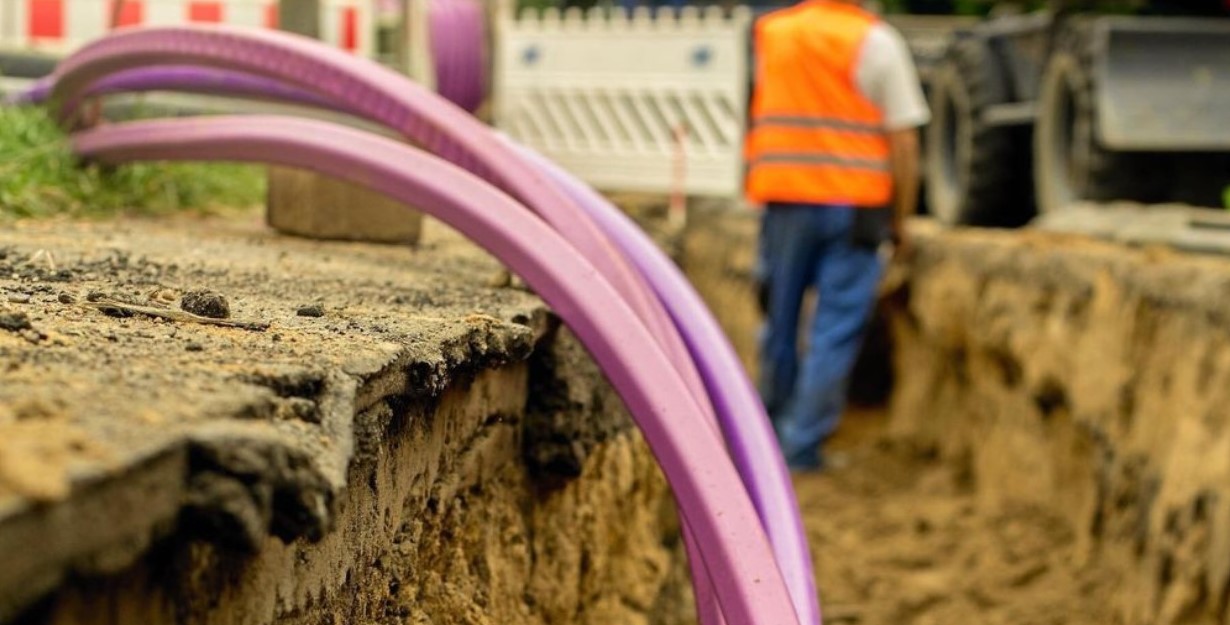
While telecom operators are expected to commit more to infrastructure investment, laying fibre across Nigerian states remains one of the critical challenges in the sector. This draws back to how the federal government has yet to achieve a uniform RoW price (₦145 per linear meter) across all states.
At some point, the FG lobbied state governors to achieve a ₦0 rate, in a bid to fast-track fibre optic rollout. By 2025–2026, a third of the states (12 governors) waived the RoW charges entirely. Yet, several states still charge more or have rebranded them as expensive application costs.
Yet, on Monday, Ekiti State, in its Right of Way Law, 2026, fixed the maximum RoW fee at ₦145 per linear metre for ducts and cables and ₦700,000 per site for a Base Transceiver Station. This action further points to bottlenecks faced by telcos in deploying infrastructure and expanding internet access.
Hidden fees
What the Nigerian government and regulators must fix now isn’t radio frequency spectrum but hidden fees that stall fibre deployment and telecom infrastructure establishment nationwide.
Data from the NCC’s Ease of Doing Business portal shows that 12 states currently charge zero RoW fees, while 16 states are charging the exact ₦145 per linear metre threshold. However, nine states are charging above the threshold, coming 13 years after the national agreement to fix RoW fees at ₦145 per linear metre.
The pivotal attention is on hidden fees associated with fibre deployment.
Some states charge application fees, especially those with ₦0 and ₦145 RoW levies. Both Adamawa and Enugu states collect application fees of ₦100,000 despite having a ₦0 RoW charge. Ekiti collects the highest at ₦700,000. Others are Cross River (₦250,000), Edo (₦10,000), Gombe (₦10,000), Lagos (₦20,000), Ondo (₦20,000), Oyo (₦50,000) and Yobe (₦25,000).
Beyond the decision to invest in and upgrade infrastructure, Nigerian operators face rigorous application processes and hidden fees that they are exposed to during the process of laying fibre ducts. Amid these rigid processes, telecom operators mostly prefer deploying their fibre in industrialised areas and concentrated cities where they can get the highest returns.

Deployments in rural and semi-urban areas carry the lowest immediate return on investment for telcos. If high RoW fees and hidden permitting costs inflate the cost of infrastructure in these areas, operators will prioritise highly populated areas.
The above answers why about 80-85% of Nigeria’s fibre-to-the-home deployment is concentrated in top cities such as Lagos, Rivers and FCT Abuja, highlighting the digital divide and how rural areas continue to search for reliable internet coverage.
Spectrum policy cannot operate alone; federal and state authorities need uniform RoW charges, eliminate hidden application fees, and curb multiple taxation on telecom infrastructure. If not, Nigeria’s ambition to provide quality network access nationwide will remain largely unmet.
Also read: 13 years after ₦145 RoW agreement, states still charge between N6,600 to N700,000 for fibre rollout
Source: