Creates ‘Room to Imagine’ in Port Harcourt
All book and no skill is said to cause career imbalance especially in the Niger Delta where oil industry insists on employing first class students.
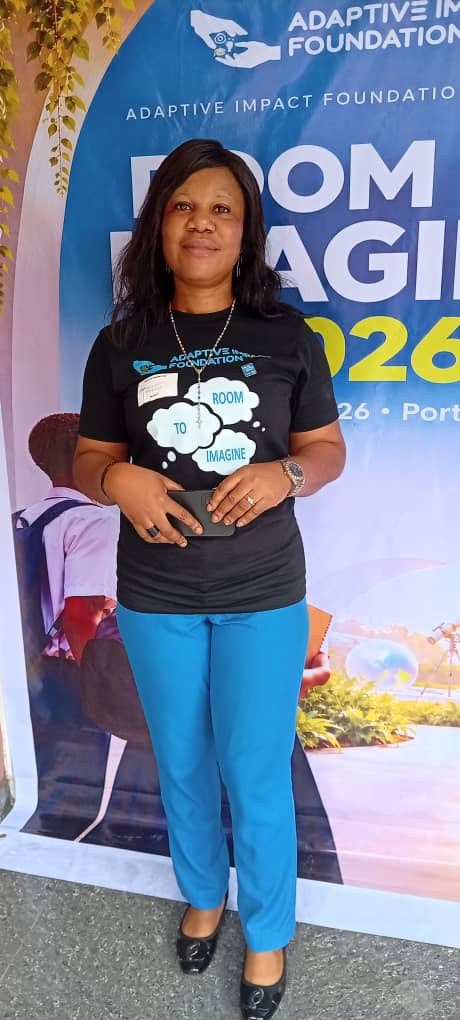
Now, a social worker, Emmanuela Idout, founder and director of ‘Adaptive Impact Foundation’ has rolled out resources to help young persons to begin to pursue skills that the hand can do.
Idout, who has done a lot of volunteering has been motivated by stints in across cancer care, women and gender programmes, education, and early childhood.
Now, ‘Room To Imagine’ has been created in the past two years to build skills and handy tasks to students as well as bring students from both the high and low income brackets to work together and create imaginative products.
Speaking to newsmen during a one-day programme on STEM exploration, creative labs, learning resources, etc, the founder said she noticed that across the sectors she work with, one thing stood out, which is education. “So I always wanted to do something that caters to education, but not just education. We already know that a lot of kids in Nigeria are out of school but the ones that we even enroll, the quality of education they are getting is really low.”
Low teaching quality in most public and private schools seem to spread across the education sector.
“So, our objective is how to bring qualitative, impactful, and educational experiences to children in lower income communities or schools.
“So that’s one of my motivations. Seeing that gap between higher and lower income communities in terms of educational experiences, we just wanted to do something to bridge that gap.”
Students from different schools filled the Soja Heights Centre on Abacha Road in the GRA 2 in the Garden City.
Felicia Marcellinus, an educational consultant and emotional therapist, is also one of the resource persons and specializes in helping students build brilliance. She helps students build their brilliancy level.
Marcellinus said: “I’m here to support the programme, ‘Room to Imagine’. This is an initiative of the Adaptive Impact, an NGO.
“Today they have brought students together to imagine a lot of things, talks, and lots of creative works to be done. So I tried to show the students there is more than one way to be brilliant. Brilliancy is not just academics.”
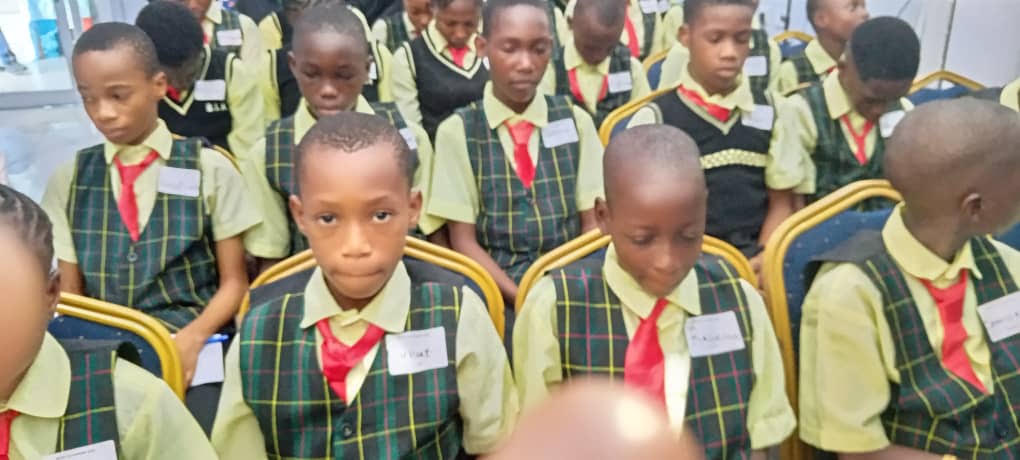
Explaining the workload, Macellinus said: “We looked at four ways to achieve brilliancy: what you know, what you can do with your hands and things around you, how you relate with others. I also made them to understand that for you to be brilliant, you need the three T’s: talent, time, treasure.
“And for you to remain brilliant, you need some criteria like informed authority, mentor, and lots of other things they were exposed to.”
Aside this talk, she stated, they have creative work now to help them build their skills. “It’s not just the academic aspects or the theories or the knowledge we have given to them today, there is the practical side.
“We have like-colour batch painting and their planting; we have the candle making; lots of creative works; and things they can also do with their hands.
“This way, they are becoming brilliant in interacting with others who are here with them.”
She said it is like a yearly programme, helping students especially from low-income schools who do not have this privilege to leave their environment to another place do this creative wall and see things. “We also made them have a virtual talk so they can see a different planet and different careers they can take up.
“It’s not just the next in engineering all the time. We have training careers like the cyber security, cloud computing, nurse practitioner and lots more.”
Explaining the objective, the emotional therapist said: “We are here because we are determined to expose the students to creative, educative, and mind-expanding experiences beyond the classroom.
“Most of these kids come from lower resourced or under-resourced communities and schools. So we wanted to take them out of the classroom because their educational experiences are very limited. Their lives have been about just home, school. They don’t have extracurricular or creative experiences in school.
“So when we identified this school, we felt the need for them to be one of our beneficiaries so that they can come in, create things, and just have a better exposure to careers, ideas, and creative experiences outside their classrooms.”
She said the scheme is two years old and that they have over 1000 persons and 600 students across three different states in Nigeria.
“This is called ‘Room to Imagine’ which is one of our pilot programmes. For ‘Room to Imagine’, it is to bring them together and give them the room to imagine possibilities outside their realm of reality.
“Today they are going to create candle making, they are going to make fabric collage, and they are going to make planters from calabash.”
Vivian Moje, the proprietor of Bonafide International Academy, one of the many schools that participated in the career balancing scheme, said school owners are very happy seeing these children coming out for a creative activity.
Moje stated: “The fact is that it is a new beginning in their life because all we are seeing now is about creativity. It is not just to sit down in a classroom to learn, but when something like this such as teaching them what to do, from there they can start producing, and start doing other things.
“What they are doing here today is what our country needs as is in most other countries. It should not be all about reading and writing but to reason and be creative to showcase talent.”
She made it clear that some children are not good in academics, but that this scheme opens opportunities for those in the creative sector. “We have some students that are weak academically but they have shown strong signs now. One of them is a female. She will likely go far because she’s not good in classroom, but once they come to creativity, she’s very excellent.
“So, I can now say that it’s a real comfort. I do pray that it should continue. We need this programme from time to time.”
Many wonder about the impact of this scheme on the students and their schools. She said: “By learning all this now, you will see them begin to exhibit what they have learned from the area.
“I believe that from this little one, they can create more. I believe they can create more. Their message to the parents and the society at large is for them to leave the children to do other things. It will help them to compare and measure their development between academic and creative segments of their growing lives.”
She urged the students to endeavour going out and create something. “Creativity is what is a good now. If you are going to any other country, you must have something on hand you can be doing with your hands with things that are around you.
“Parents should leave their children not only to sit down, but to bring them to the academy. It is good. Let there be something they can hold on.”
Kingsley Empress, one of the participating students, who came from Bonaparte International Academy, said he was excited to be here. “I’ve also learned a few things like brilliance, which does not just mean academics but also by art and what you can do with your hands.
“I’m excited and I would like to learn the candle making. I am going to teach others about things I learnt such as teamwork, the planet, and other things we learnt here.”


Source: