

Howdy! 
Nvidia’s AI chips are proving harder to keep out of China than the US government expected.
Yesterday, Reuters reported that a Chinese university with ties to the military bought two Nvidia H200 chips for $123,000, despite being on a US trade blacklist. And it wasn’t an isolated case. Procurement records show other restricted chips reaching Chinese research institutions through local suppliers.
The US has spent years trying to limit China’s access to advanced AI technology. Meanwhile, the chips keep finding their way across the border.
Again, I found this TechCentral headline truly hilarious: “The Internet is roasting Jensen Huang, using his own GPUs.” People are using AI-generated memes and videos to poke fun at Nvidia’s CEO over his reported affair. I even came across a cutesy Instagram video depicting Huang meeting a woman in an elevator and becoming awestruck. The Internet really has no chill.
Anyway, welcome to today’s edition. Plenty is happening closer to home, too.
Read smart insights about Francophone Africa’s tech ecosystem—weekly.

Money
Egypt’s remittances hit a record $38.2 billion

Egyptians living abroad are sending home more dollars than ever, and their country has plenty of reasons to be grateful.
According to the Central Bank of Egypt (CBE), remittances reached a record $38.2 billion in the first nine months of 2026. Between July and September alone, Egyptians sent home $13 billion, up 20.4% from the same period last year.
Explain like I’m new here: Remittances are money people working abroad send home, usually to support their families. For Egypt, they’re also an important source of foreign currency, helping the country pay for imports and meet international obligations.
Catch up: In March 2024, Egypt allowed its currency to trade more freely. Before then, Egyptians abroad could get better exchange rates outside official banking channels. Closing that gap helped bring more transfers into banks, where the dollars could support the wider economy.
Here’s the interesting part: The rebound has held up despite renewed currency pressure and concerns that workers in Gulf countries might cut transfers amid regional conflict.
But there’s a catch: Egypt’s remittances reached $47.3 billion in the financial year ending June 2026. Yet, its merchandise trade deficit widened to $64.8 billion, while its current account deficit reached $22.5 billion.
Zoom out: Egyptians abroad are helping keep dollars flowing into the country. But until Egypt earns more from exports, its economy will remain heavily dependent on remittances.


Upgrade your business today
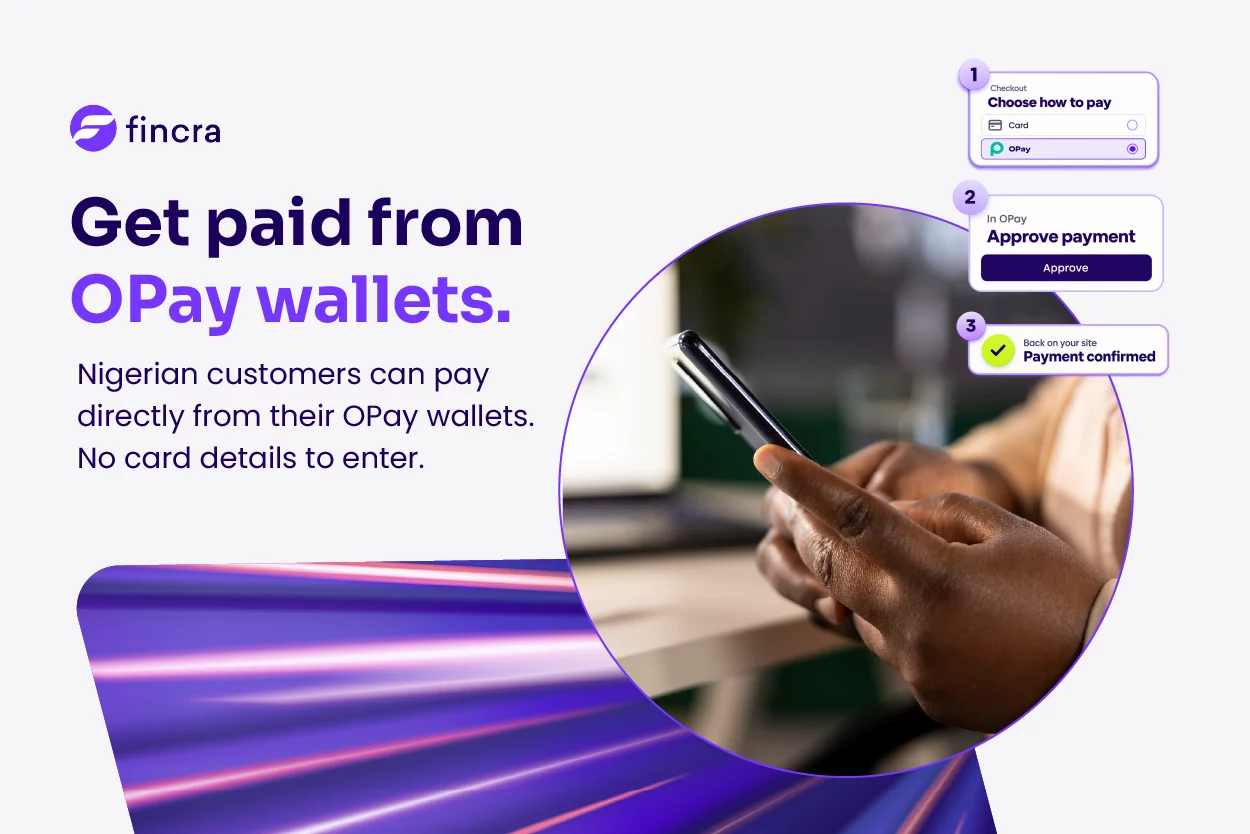
Pay with OPay is live on Fincra. Customers approve payments straight from their OPay wallet, and you get confirmation back on your site. Available now for NGN collections! Upgrade your business today with Fincra pay with OPay.
connectivity
Ghana wants 70% 5G coverage by March 2027

Ghana wants 70% of its population within reach of a 5G network by March 2027. It’s an ambitious target, especially for a country that recently abandoned its original rollout plan.
Samuel Nartey George, Ghana’s communications minister, announced the target at an International Telecommunication Union (ITU) conference in Qatar.
Explain like I’m new here: Ghana initially placed its 5G ambitions in the hands of Next Gen InfraCo, a shared telecoms infrastructure company. The company received exclusive rights to build a wholesale 5G network for ten years, with mobile operators expected to rent capacity rather than build competing networks.
But the arrangement struggled to gain traction. By May 2026, Next Gen InfraCo reportedly had just 49 sites, while major mobile operators had yet to sign up to use its network.
In July, Ghana’s National Communications Authority (NCA) ended the company’s exclusivity, opening 5G spectrum licencing to competing operators. By October, MTN Ghana and Telecel received 5G permits.
Why it matters: Ghana is betting that competition will speed up network deployment. Operators can now pursue their own 5G infrastructure instead of waiting for a single provider.
The government is also completing 2,016 rural telecommunications sites and upgrading older networks to support faster connectivity.
Zoom out: More towers won’t automatically mean more 5G users. Affordable smartphones, data prices, and actual demand still matter. Ghana has changed who gets to build its networks. Whether more Ghanaians can afford to use them is another question.
Cybersecurity
Kenya launches cybersecurity centre amid growing cyber threats

Kenya has launched the SecureKE Sovereign Security Operations Centre (SOC) about 65 kilometres southeast of Nairobi. The Konza Technopolis Development Authority (KoTDA), the government agency responsible for developing the country’s flagship technology and innovation city, established the centre through a partnership with SecureKE, a Kenyan cybersecurity company. The centre will provide government institutions and private organisations with access to cybersecurity services.
Explain like I’m new here: Kenya has a national cybersecurity response system called the National Kenya Computer Incident Response Team–Coordination Centre (KE-CIRT/CC). It coordinates incident responses, issues threat alerts, and works with local and international organisations to tackle cyber threats. SecureKE is designed to give institutions a shared operational service for monitoring their own digital systems and responding to suspicious activity.
Why Kenya is doing this:INTERPOL’s 2025 Africa Cyberthreat Assessment found that cybercrime accounts for more than 30% of reported crime in both West and East Africa. It also found that 90% of African countries surveyed needed significant improvements in law enforcement or prosecution capacity. Kenya detected 4.56 billion cyber threat events in late 2025, while reported banking cyber-fraud losses reached KES1.9 billion ($14.6 million), which shows the scale of activity security teams must contend with. As the country puts more public services and business activity online, the goal is to ensure security grows alongside connectivity.
Telecoms
Telkom challenges South Africa’s ownership rules locking out operators like Starlink

Starlink has spent months knocking on South Africa’s regulatory door, hoping to launch its satellite internet service in the country. It may have found an unlikely ally in Telkom, one of South Africa’s biggest telecoms operators, which is questioning some of the rules keeping it outside.
What happened? Telkom has challenged South Africa’s ownership requirements for telecoms licences in a submission to the Independent Communications Authority of South Africa (ICASA), the country’s telecom regulator. The company, in which the South African government holds a 40.5% stake, said the rules are too rigid and overlook other ways companies can support economic empowerment, such as skills development, local supplier investment and infrastructure funding.
Explain like I’m new here: South Africa’s Electronic Communications Act requires individual telecoms licence holders to have at least 30% ownership by historically disadvantaged groups. This has been a stumbling block for Starlink, which has resisted giving up a 30% stake to local investors.
Communications Minister Solly Malatsi proposed Equity Equivalent Investment Programmes (EEIPs) that would let foreign companies contribute through investments in local suppliers, skills development, infrastructure and digital inclusion instead of selling shares. However, the proposal attracted pushback, with Malatsi being accused of trying to circumvent the law to accommodate Starlink. ICASA opposed Malatsi’s proposal in May, but one wonders whether those critics will have the same objections now that a major local operator is also questioning the rules.
It’s more than Starlink for Telkom: The company argues that rigid ownership requirements could make it harder for telecoms operators to attract foreign capital and expand infrastructure. Allowing alternative empowerment mechanisms could give companies more flexibility to invest in skills and network infrastructure without changing their ownership structure.
If the rules also create uncertainty for established local operators, the question is whether South Africa can attract the foreign investment needed to expand its digital infrastructure without watering down its economic empowerment goals.
CRYPTO TRACKER
The World Wide Web3
Source:

|
Coin Name |
Current Value |
Day |
Month |
|---|---|---|---|
 Bitcoin |
$73,479 |
– 0.34% |
– 12.01% |
| Ether |
$2,042 |
– 1.10% |
– 19.03% |
| XRP |
$1.04 |
– 1.63% |
– 24.01% |
| Solana |
$82.88 |
– 0.28% |
– 23.32% |
* Data as of 06.44 AM WAT, November 12, 2026.
Events
-
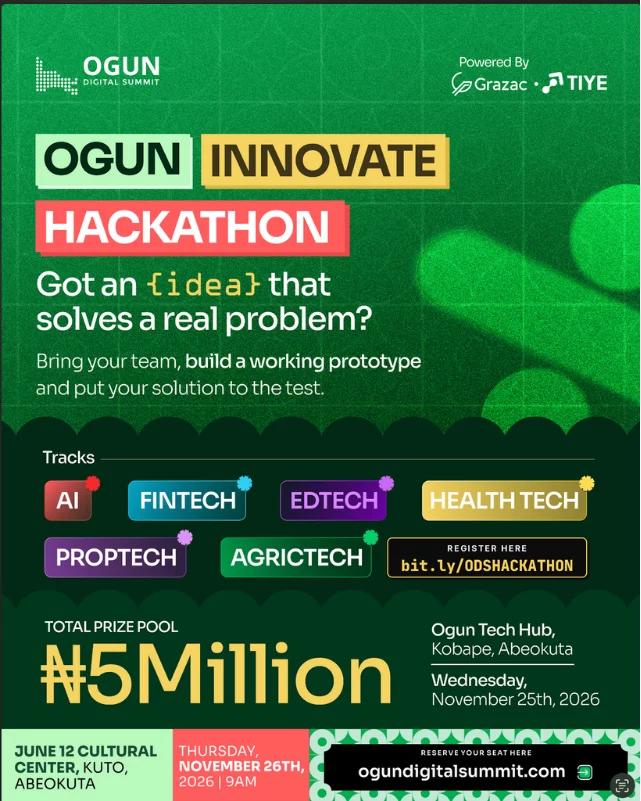
The seventh edition of Ogun Digital Summit is coming to Abeokuta from November 25–27, 2026, at the June 12 Cultural Centre. The three-day event will bring together founders, investors, developers, and tech enthusiasts for a hackathon with a ₦5 million prize pool, a startup pitch competition, conversations on AI, agritech, the creative economy, and more. Ten revenue-generating startups will also get a chance to connect with investors in a dedicated Green Room, before the summit wraps up with a gala night. Interested in attending?Secure your spot here. -

Bug reports and a constant stream of requests eat into your engineers’ time and slow down your roadmap. On Thursday, November 26, at 10 AM WAT / 12 PM EAT, Tech Safari and Stefan Kruger, CTO at Lua AI and former VP of Engineering at Paystack, will show you how AI can take some of that recurring work off your team, with live demos. Whether you build software, lead a team, or run a business that depends on one, register for free to attend.

Written by: Yemi Kareem and Emmanuel Nwosu
Edited by: Emmanuel Nwosu & Ganiu Oloruntade
Want more of TechCabal?
Sign up for our insightful newsletters on the business and economy of tech in Africa.
- The Next Wave: futuristic analysis of the business of tech in Africa.
- Francophone Weekly by TechCabal: insider insights and analysis of Francophone’s tech ecosystem
P:S If you’re often missing TC Daily in your inbox, check your Promotions folder and move any edition of TC Daily from “Promotions” to your “Main” or “Primary” folder and TC Daily will always come to you.

Source: