A historic morning in Trenton
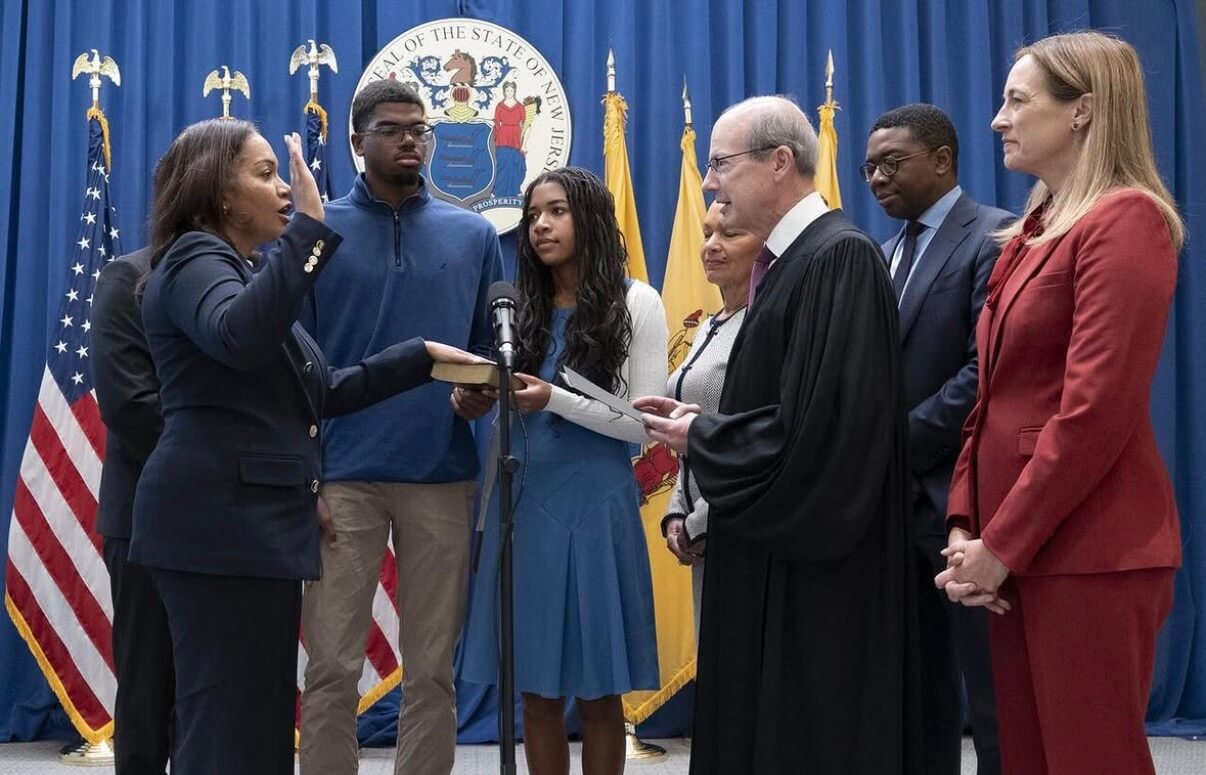
On Monday, 9 November 2026, Shirley U. Emehelu placed her hand on the Bible at the New Jersey Statehouse in Trenton and became the fifth Lieutenant Governor in the state’s history. Chief Justice Stuart Rabner administered the oath, with her husband, Ikenna, and their children, Nnamdi and Amara, beside her.
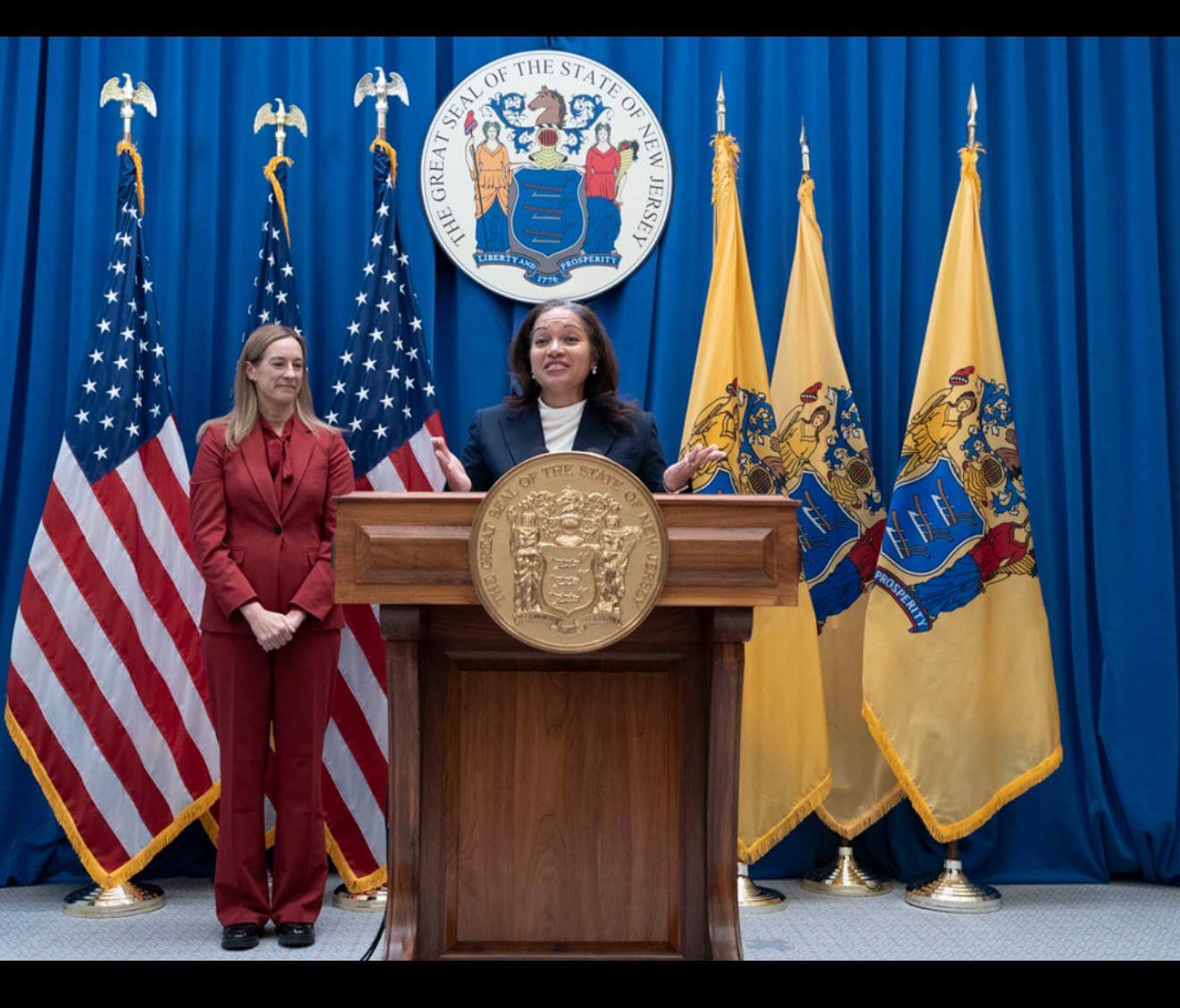
The appointment by Governor Mikie Sherrill carries several firsts. Emehelu is the first immigrant to hold the office. For the first time, both of New Jersey’s top executive posts are held by women. And for Nigerians at home and abroad, it marks something larger: a daughter of Nigeria now occupies the most senior state executive office yet held by a Nigerian American.
She also continues as Secretary of State, the post she had held in an acting capacity since September. “As a Black woman and Nigerian American, I’m proud of what this appointment represents,” she said at the ceremony.
Read also: Shirley Emehelu: The Nigerian-born lawyer making history in New Jersey
From Nigeria to Yale and the prosecutor’s office
Emehelu was born in Nigeria and came to the United States at the age of three. She went on to Yale University and Yale Law School, then clerked for a federal judge in the U.S. District Court for the Eastern District of Virginia and spent time in private practice.
For me, this appointment is personal. When I was a graduate student at Yale, Shirley was an undergraduate in the African history classes I taught. Few things are more gratifying for a teacher than watching a former student rise to high office. It is especially meaningful when that student is a daughter of the continent we studied together, now taking her place in the leadership of one of America’s most important states.
Her reputation was built in law enforcement. She served nine years as a federal prosecutor in the U.S. Attorney’s Office for the District of New Jersey, handling complex financial fraud. There she rose to Chief of Asset Recovery and Anti-Money Laundering, overseeing forfeited assets, money laundering cases and restitution to victims. It was in that office that she came to know Mikie Sherrill, then also a federal prosecutor, beginning a long friendship.
She moved into state service as Executive Assistant Attorney General from 2022 to 2024, the third-ranking post in New Jersey’s Office of the Attorney General, supervising major civil litigation and enforcement. She later served as Acting State Comptroller, the state’s fiscal watchdog against fraud, waste and mismanagement of public funds. Most recently, as Acting Secretary of State, she oversaw New Jersey’s November 2026 elections, a performance the governor cited in choosing her.
Unusually for the role, she arrives without a background in partisan politics. She succeeds Dale Caldwell, who resigned in September amid misconduct allegations that he disputes.
Read also: Nigerian-born Didi Okparake, six other Africans eye US Congress seat
What a lieutenant governor does
For Nigerian readers, the closest equivalent is a state deputy governor. In the United States, each of the 50 states governs itself under its own constitution, with its own legislature, courts and executive. More than 40 states have a lieutenant governor as second-in-command, and the role varies widely from state to state. In many, the lieutenant governor presides over the state senate; in others, the job is chiefly executive.
New Jersey’s version is young and distinctly executive. The office was created by a 2005 constitutional amendment and first filled in 2010; before then, the Senate President stepped in whenever the governorship fell vacant. Today the lieutenant governor runs on a joint ticket with the governor, much as Nigerian deputy governors do, and is first in line of succession. She serves as acting governor whenever the governor is out of the state.
New Jersey’s constitution also requires the lieutenant governor to lead a cabinet department or agency, other than the attorney general’s office. Emehelu will do so as Secretary of State, which oversees elections, cultural and historical programmes, and business and tourism promotion. She is therefore both a stand-by governor and a working member of the cabinet.
The scale of what she will help govern
New Jersey is home to about 9.6 million people and produces roughly $850 billion in annual output, according to 2025 figures from the U.S. Bureau of Economic Analysis. That is larger than the economies of most countries, and roughly two times Nigeria’s. Its strengths lie in pharmaceuticals and life sciences, finance, logistics around the Port of New York and New Jersey, and professional services.
The state’s fiscal year 2027 budget, signed by Governor Sherrill on 30 June, totals $60.7 billion in state spending, the largest in New Jersey’s history. With roughly $30.5 billion in federal funds added, total operating spending exceeds $90 billion.
Read also: Meet Didi Okpareke, Nigerian-born pharmacist contesting in the US midterm election
Set that beside Nigeria’s 2026 Appropriation Act, which President Tinubu signed in April at ₦68.32 trillion, the largest federal budget in Nigeria’s history. At the official NFEM rate of about ₦1,350 to the dollar in November 2026, that comes to roughly $50.6 billion. New Jersey’s state-funded budget alone is therefore about $10 billion, or 20 per cent, larger than Nigeria’s entire federal budget. Including federal funds, New Jersey spends almost twice as much. Per head, the gap is stark: about $6,300 for each of New Jersey’s 9.6 million residents, against roughly $220 for each of Nigeria’s estimated 230 million people.
The budget carries a projected surplus of about $6.1 billion and a $7.3 billion pension contribution, the sixth consecutive full payment. It commits a record $12.4 billion to K–12 education and more than $4.1 billion to property tax relief. The administration also says it has cut the structural deficit to $1.35 billion, from more than $3 billion when Sherrill took office in January.
For a lieutenant governor whose career has been spent following the money, through fraud prosecution, asset recovery and the comptroller’s office, these are numbers she is unusually well placed to scrutinise.
Why it matters to Nigeria
Nigerian Americans are among the most highly educated immigrant communities in the United States, and their footprint in medicine, law, academia, finance and technology is well established. Public office has come more slowly. Wally Adeyemo’s tenure as Deputy Secretary of the U.S. Treasury showed what was possible at the federal level. Emehelu’s appointment brings a Nigerian American into the line of succession for the governorship of one of America’s wealthiest states.
Her path is a familiar one for many diaspora families: arrival as a young child, excellence in school, entry into a demanding profession, and then service. What distinguishes her is where that service has been directed: at fraud, corruption and the protection of public money. These are themes that resonate deeply in Nigeria.
Read also: Nigerian-born Wofai Samuel stands behind US Vice President at Iowa midterm rally
At her swearing-in, Emehelu said she hoped her appointment would encourage young people to find their own paths into public service. For a generation of Nigerians watching from Lagos, Enugu, Houston and Newark, she has just shown them one.
Dr Wiebe Boer, Chief Growth Officer of the JIPA Network, member, BusinessDay Editorial Advisory Board


Source: