The cinema is a useful place to begin a conversation with Toyosi Badejo-Okusanya about accessibility. She had seen the publicity for Barbie, a 2023 satirical fantasy comedy film directed by Greta Gerwig, and bought a ticket to watch it. There were no captions at her screening.
All the work of persuading her to come had succeeded, but at the point where she sat down to watch, much of the film was out of reach.
Badejo-Okusanya, who is deaf, knows what goes into getting a customer that far. Her career in marketing took her to Jo Malone London, where even the placement of a bottle on a shelf was something to think about.
“A report is something you file,” she says, “What a customer experiences is something you have to keep working on.”
She still notices where shops put things and wonders what the sales data told them. That attention to detail makes the cinema experience striking. A company can spend months making you want to see a film and fail to give a thought to whether you can follow it once you’re there.
She grew up in Nigeria, moved to London at 16 and studied law. Her family had expected a lawyer. They got the law degree, she says, and then she went into tech. She now runs Adaptive Atelier, a company that helps businesses find and fix barriers in their digital products. Its approach combines automated checks with testing by disabled professionals, whom it pays for their work.
We talked about growing up deaf in Nigeria, finding community in London at 16, and what made her stop looking for a regular job and give the company her full attention.
This interview has been edited for length and clarity.
Where did you grow up, and what would your family say you were like at ten? What would they say you still haven’t grown out of?
I grew up in Nigeria. If you asked my family about me at ten, I think they’d say I was finding my confidence. That’s around when I started secondary school, which was a big step: long days away from home for the first time, a new environment, far less of my parents to lean on. I think I handled it pretty well.
What they’d say I haven’t grown out of is the determination, and a habit of coming up with random things and then actually seeing them through, from the idea to the finished thing. The ideas were never the hard part for me. The finishing is the bit I enjoy.
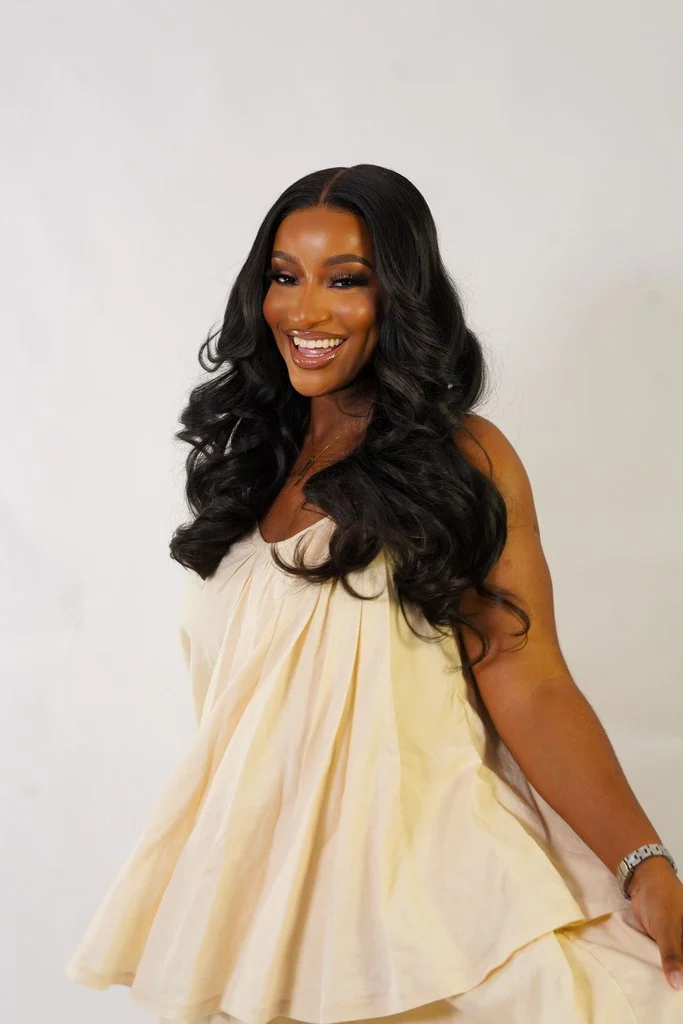
What did the adults around you think you’d become? Did you ever want the life they imagined for you?
A lawyer. Everyone was certain, and for a long time so was I. I did study law, so I delivered that part, and then I went into tech, which I think surprised them.
But what I wanted from law was never really the title. I wanted to defend people who were being treated unjustly, and living with a disability showed me where that could happen. A lot of that unfairness turns out to be built into products and platforms before any person has the chance to be unkind, so that’s where I ended up working.
What do you remember about how people talked about deafness when you were growing up? When did you find your own words for it?
In Nigeria I heard “deaf and dumb” a lot. And when I said I was deaf, people would tell me, “Don’t say that! You’re not deaf.” I remember being confused, because by definition, that’s what I am.
Deafness was also spoken about in a religious way, as evidence that something had gone wrong somewhere and I needed to pray for God to fix me.
I moved to London at 16, and that’s when I found my own words for it. I found community, and I started to see it as part of what makes me stand out, rather than something to be repaired. It’s the way I am, and nothing can change that.
Before you worked in beauty, what did you find beautiful? Did working with brands like Jo Malone London change what you noticed when you walked into a shop?
I’d always loved marketing, so seeing a brand like Jo Malone London up close was a lesson in attention to detail. Luxury fashion and beauty are inventive and slightly eccentric in a way you don’t find everywhere.
It did change what I noticed in a shop. I now look at where products are placed, and I think about how data shapes what people buy and how different that looks from region to region. One example that stayed with me: fresher, woodier scents were more popular in APAC, while in EMEA people leaned towards stronger, oud-based ones. You never walk into a shop the same way again.
Can you remember a campaign you were proud of but couldn’t fully experience yourself? Did you say anything at the time?
Not one of my own that I can point to. The closest is films. When Barbie came out, and more recently The Devil Wears Prada 2, I went to the cinema like everyone else, and there were no captions, so most of it was out of reach.
Those campaigns invite you in from every billboard and every feed, and then the film itself doesn’t let you follow it. That’s a strange gap for an industry that thinks so hard about experience.
What did working with big brands teach you about how to get a decision made? When accessibility needed money, whose mind did you have to change?
That decisions are rarely made in the meeting. There are layers of approval, so you work backwards: find out who signs it off, build the business case for them, and look for the person who either owns the decision or genuinely cares about the cause. Nobody approves “it’s the right thing to do”. They approve a case.
When accessibility needed money, the minds I had to change were the CEOs and the C-suite, because that’s where the budgets sit.
You divide your time between Lagos and London. What feels easy in Lagos that people in London make unnecessarily complicated? And what works the other way round?
In Lagos I find it much easier to get in front of key executive teams than I do in London. And I don’t think about my race in Lagos, which is its own kind of ease.
The other way round, London has more legal obligations around accessibility, so organisations have a reason to act. In Lagos that pressure mostly isn’t there. I can explain that a large group of people is being left out, and many still don’t see it, because most of the people in the room can use those platforms without a second thought. Neither place has it worked out. They’re missing different things.
When did you realise you wanted to build Adaptive Atelier rather than spend your career advising other companies? What did you have to give up to find out whether it could work?
When I realised how many solutions could be built, and that as an adviser I would never get to set the terms. You make a recommendation, and someone else decides whether it happens.
What I gave up was chasing a 9-to-5. It was a tough decision. For a while I tried to do both, because that made more sense financially, but my attention was split and I was never giving either one 100%. So I decided to find out what would happen if I gave Adaptive Atelier everything.
That was almost two years ago, and, well, we’re still here. We’re building slowly, but towards one goal: inclusive solutions for all.
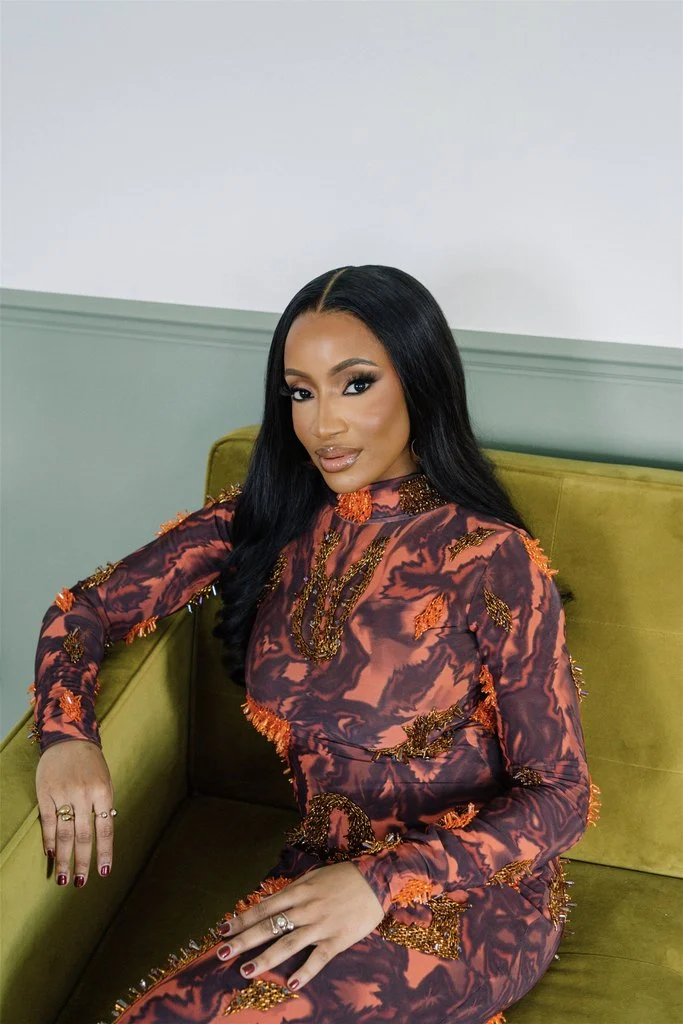
Who was the first person to pay you for work you’d done through Adaptive Atelier? What did they think they were buying, and was it the same thing you thought you were selling?
A financial institution. I’ll leave their name out of it. I think they thought they were buying a report: a list of what was wrong, something to put in front of compliance. What I thought I was selling was a way to see their product through a disabled customer’s eyes. A report is something you file. What a customer experiences is something you have to keep working on, and I think that gap is where most of the real work sits
Show me something your AI would pass that a disabled tester would send straight back. What does the person catch that the software misses?
The example I keep coming back to is from our own tool. When we scanned some Nigerian fintech homepages, we found an empty button. AdaptiveTest suggested a fix: add the words “Click me”.
Technically, that passes. The button now has a name and the automated check is satisfied. But a screen reader user hears “Click me” and has no idea whether it sends money or closes a pop-up. A disabled tester would send that straight back.
Software can tell you something is missing. It can’t decide what the label should say, whether alt text is actually useful, or whether a form makes sense when you can’t see it. That’s why I describe a scan as the first pass, not the finish line.
When a client pays for an accessibility test, how much of that fee goes to the people doing the testing? What has it taken to turn that expertise into steady paid work?
The principle is simple: disabled professionals do the testing through AdaptiveAlly, and they’re paid for it rather than being asked to give their expertise away. Testers are paid today and get to keep between 80-90% of the fee whilst Adaptive Atelier takes a commission per project.
Steady work is the harder part. A tester only earns consistently if clients keep coming back, which is why we built Test, Wiz and Ally as a loop rather than three separate products: the scan finds the issues, and human validation returns each time something changes.
Has a client ever wanted to be seen to care about accessibility more than they wanted to fix the problem? How did you handle that conversation?
I don’t think of it as bad faith. Many organisations come to accessibility through reputation, because that’s what gets attention internally. The risk is when the badge becomes the goal.
So I try to move the conversation from “how do we look?” to “what happens to a disabled customer on our checkout page?” Accessibility is a product and customer-experience responsibility. A statement, a scan or a personalisation tool on top of a broken journey doesn’t change what a customer actually experiences. The real test is whether a disabled person can complete the task on these digital platforms
In Sound Through My Lens, you tell parts of your own story in public. Has there been a moment you thought you’d share and then decided to keep for yourself?
Yes. I’m fairly open about parts of my story, but I’ve learned not to share something until I understand it myself. If I’m still in the middle of it, it stays with me. The stories in Sound Through My Lens are ones I’ve had time to make sense of, and I’d rather give people something considered than something raw that I might wish I’d kept. There are times when I have been discriminated against at global embassies because of my hearing aids and still haven’t shared those stories till today.
What does a good Saturday look like when nobody needs your opinion on accessibility? Where are you, who’s there, and what are you eating?
It starts slowly. No laptop and, if I can help it, nobody asks me anything. I like being with people I don’t have to explain myself to, which usually means friends who care about clothes, fashion, beauty and making things as much as I do. There’s food, of course, preferably cinnamon rolls, taken slowly, with good conversation. If there’s a project on the go, it’s about getting it from ideation to execution.
If we have lunch again in ten years and Adaptive Atelier has become everything you hoped it would be, what would still have to be true about your life for you to say you’re happy?
I’d want to still be someone who makes things for the pleasure of it, not only because they need to scale. I’d want my friendships and my creative life to have had the same attention I gave the company. And I’d want to be splitting my time between different countries because I like exploring new environments and cultures, not because the work demands it. If Adaptive Atelier has done what I hope, the world is a bit more accessible and I’m not the one who has to explain why.
Source: