

Good morning 
Welcome to another week!
We’ve been cooking up something at TechCabal, and we’re almost ready to let you in on it.
When we last asked for your feedback, some of you told us what you wanted: a better design, more interactive features, and an all-round better newsletter experience. We listened. And we’ve been busy.
In the coming weeks, we’re giving TC Daily and our other newsletters a fresh look and feel. We’re also adding a brand-new newsletter dedicated to Southern Africa, bringing you more of the stories that matter across the region.
We won’t spoil the surprise just yet, so keep your eyes peeled. There’s plenty to look forward to.
Let’s dive into today’s dispatch.
—Emmanuel
Read smart insights about Francophone Africa’s tech ecosystem—weekly.

Capital Markets
Quickmart’s stock takes a tumble

Quickmart went public, and investors went shopping. Then some of them headed straight for the checkout.
Shares in Kenya’s second-largest supermarket chain fell 7.9% on Friday, November 13, just a day after Quickmart debuted on the Nairobi Securities Exchange (NSE). The stock quickly changed fortunes after opening 33.3% above its initial public offering (IPO) price on Thursday.
Explain like I’m new here: Quickmart’s journey to the stock market began in 2018, when private equity firm Adenia Partners bought a majority stake in Tumaini Supermarket. Adenia acquired 51% of Quickmart the following year and merged the two chains in 2020.
The result was a retail heavyweight with 72 stores across 16 Kenyan counties, processing about five million transactions monthly. Its annual revenue grew from $37 million in 2018 to $389 million in 2025.
Adenia’s partial exit through the IPO gave investors a chance to own a slice of the supermarket business. Shares were offered at KES 7.50 ($0.058) each and opened at KES 10 ($0.077) on Thursday, November 12. Not bad for a first day at the till.
The price check: Friday’s dip suggests some investors were eager to cash in after the strong debut. The supermarket has spent years convincing Kenyans to shop there. Now it has to convince investors to stay.
Zoom out: Quickmart isn’t the first newcomer to the Nairobi Securities Exchange to lose some shine after its debut. Kenya Pipeline Company and Family Bank also enjoyed first-day rallies this year, only to stumble in their next trading sessions.
Kenya Pipeline Company closed its first trading day up 2% at KES 9.18 ($0.071), before slipping to KES 9.10 ($0.070) the next day. Family Bank had a more dramatic ride: its shares surged 44% to KES 26 ($0.20) on debut, then fell 5.2% to KES 24.65 ($0.19) in the following session.
Both stocks remained above their listing prices at Friday’s market close, so the early pullbacks weren’t disasters. A splashy debut makes headlines. But the big win for the NSE is getting investors to keep trading those shares long after the excitement fades.


Upgrade your business today
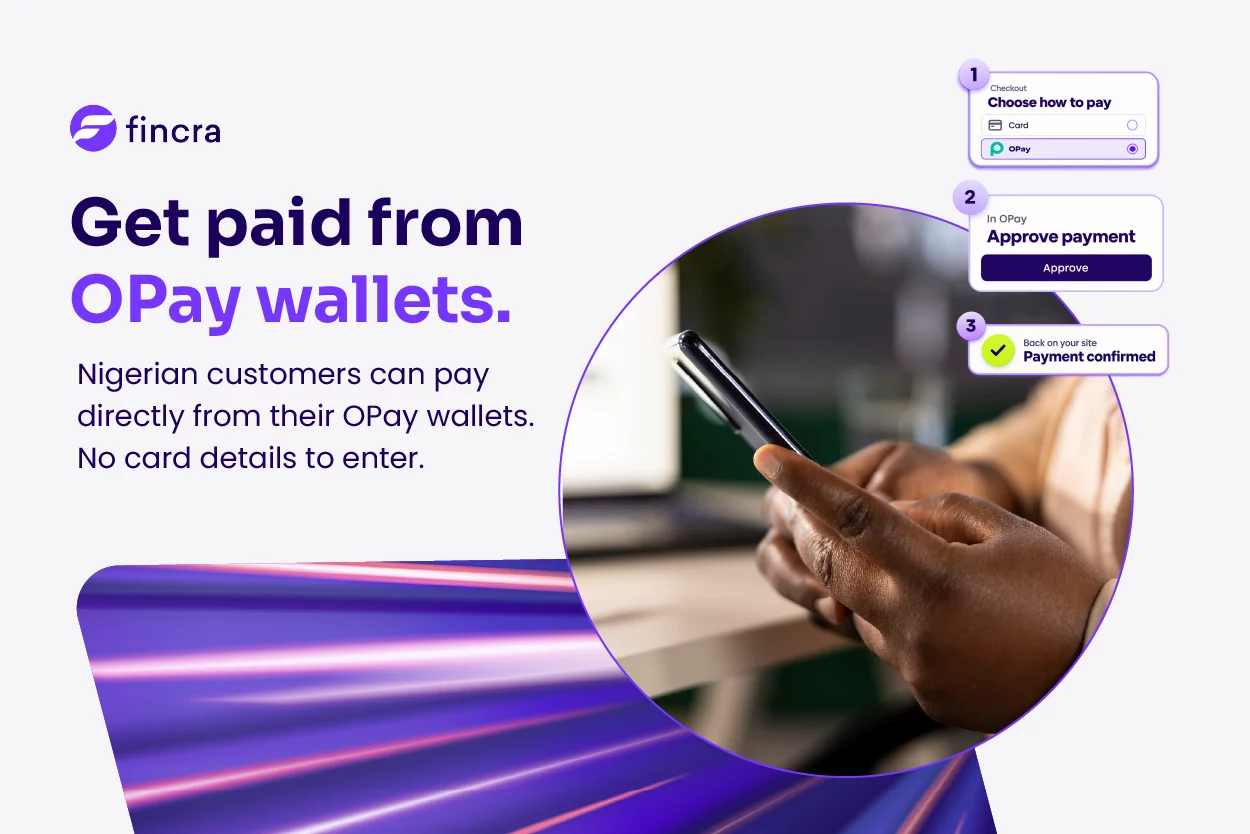
Pay with OPay is live on Fincra. Customers approve payments straight from their OPay wallet, and you get confirmation back on your site. Available now for NGN collections! Upgrade your business today with Fincra pay with OPay.
Fintech
Egypt says no to new digital lenders

Egypt’s lending market is growing fast. Its regulator’s response? Nobody else gets in. At least not yet.
Egypt’s Financial Regulatory Authority (FRA) has extended its freeze on new consumer finance and microfinance licences until October 11, 2027. The restriction covers traditional lenders and non-governmental organisations (NGOs) offering small loans. Fintech companies hoping to offer consumer loans face a separate freeze until February 25, 2027.
Explain like I’m new here: Egypt first shut the door to new lenders in October 2024, after issuing 25 licences in just two years; it gave 10 licences to microfinance providers and 15 to consumer finance companies.
The FRA wanted to slow things down and keep a closer eye on the companies already operating. Two years later, the door is now firmly shut—at least for another few months.
Here’s the funny part: Egyptians aren’t exactly borrowing less. In 2025, consumer finance volumes jumped 57% to EGP 96.3 billion ($1.8 billion), with 48 licenced companies operating in the market.
So, business is booming. But new competition will have to wait.
Why the freeze continues: The regulator cites financial stability, market needs, and service quality. It wants to ensure existing lenders are financially sound and treating borrowers properly before letting more companies in.
Zoom out: The freeze gives established lenders another year without new entrants coming through the traditional licensing route. Existing fintech lenders can continue operating, but startups waiting for a licence will have to wait longer.
Egypt wants a healthier lending market. Keeping new players out could make it harder for fresh ideas and competition to enter.
Telecoms
Vodacom wants faster 5G in South Africa

There’s 5G, and then there’s 5G Internet that does not slow down when the whole neighbourhood goes online. Vodacom, one of South Africa’s largest mobile operators, wants the latter, and it is upgrading how its network handles data.
What happened? Vodacom has commercially deployed New Radio (NR) Carrier Aggregation across its 5G network, becoming the first operator in the country to roll out the technology at scale. The technology lets the network combine multiple 5G frequency bands into a single, wider data channel. This increases the amount of information it can carry simultaneously, particularly in busy locations where many customers are competing for network capacity.
Customers with compatible devices could experience quicker downloads, smoother streaming and more reliable connections.
Vodacom is getting more out of its spectrum: In March 2022, Vodacom spent R5.38 billion ($316 million) to secure 110MHz of spectrum in ICASA’s auction, including frequencies in the 700MHz, 2600MHz and 3500MHz bands. Lower frequencies travel further and penetrate buildings more easily, while higher frequencies can carry more data but generally cover smaller areas. Carrier aggregation allows Vodacom to combine the capacity of different bands instead of treating them as separate resources.
Vodacom has not disclosed specific speed improvements or listed all compatible devices. Because the technology improves capacity rather than coverage, it will not bring 5G to places where Vodacom has yet to deploy it.
Regulation
South Africa’s gaming platforms could face new payment rules

You’re halfway through a game when you run out of coins. So you top up your wallet with real-world money or sell an item to another player. It is all part of the game until someone starts asking where the money came from and who is keeping track.
What happened? South Africa’s Financial Intelligence Centre and Reserve Bank could soon have more to say about how gaming platforms handle money. The Financial Action Task Force (FATF), the global body that sets standards for combating money laundering, has warned that gaming and gambling platforms can be used to move illicit funds through digital wallets, cross-border payments and virtual assets.
Explain like I’m new here: That warning has landed as the South African Reserve Bank (SARB) works on a new Authorisation Framework for payment services. The proposed framework would regulate businesses based on how they handle money. If users can load money onto a platform, keep it there and spend it on digital goods, regulators may want to know how the platform manages money.
The proposal could require platforms that hold this kind of in-app balance to register with the SARB. Businesses carrying out certain payment activities could also have to register with the Financial Intelligence Centre and comply with anti-money-laundering rules.
What happens next? This could mean taking a closer look at how gaming companies’ wallets, marketplaces and payment partners work. Depending on how the framework is finalised and how a platform’s services are classified, businesses could face transaction monitoring and suspicious-activity reporting requirements. This does not mean South Africa is about to ban in-game purchases or make every gaming platform a bank.
CRYPTO TRACKER
The World Wide Web3
Source:

|
Coin Name |
Current Value |
Day |
Month |
|---|---|---|---|
 Bitcoin |
$64,795 |
+ 0.01% |
– 20.43% |
| Ether |
$1,821 |
+ 0.73% |
– 24.92% |
| Aster |
$0.5461 |
+ 4.64% |
– 22.40% |
| Solana |
$71.67 |
– 0.91% |
– 35.94% |
* Data as of 06.30 AM WAT, November 16, 2026.
JOB OPENINGS
- Sparkle Nigeria — Business Growth Manager — Lagos, Nigeria
- Tech Safari — Content Lead — Nairobi, Kenya, and Abuja, Nigeria (remote, anywhere in Africa)
- CredPal — Credit Underwriter — Lagos, Nigeria
- Pesa — Social & Influencer Marketing Manager — Remote (Nigeria)
- Bamboo — Product Manager (Misan) — Hybrid (Lagos, Nigeria)
- Àngeles Sostenibles — Operations Associate — Abuja, Nigeria
- Coinomad — Sales Manager, Business Development Manager — Nigeria
- Sumsub — Senior Anti-Fraud Analyst — Remote (anywhere)
- AfriChange — Compliance Specialist — Remote (Nigeria)
- Scouthappy — Growth Lead for Fintech (Stocks) — Remote (Nigeria)
- Daya — Growth Product Manager (Daya Coins) — Remote (Nigeria)
- Qore — Site Reliability Engineering (SRE) Manager — Lagos, Nigeria
- Afreximbank — Student and Postgraduate Internship — Cairo, Egypt
Looking for more opportunities? There are additional openings on TechCabal’s job board. We’ve also cleared out outdated listings to keep opportunities fresh for job seekers. If you’re hiring and would like to feature an open role, please submit it via this form.

Written by: Yemi Kareem and Emmanuel Nwosu
Edited by: Emmanuel Nwosu & Ganiu Oloruntade
Want more of TechCabal?
Sign up for our insightful newsletters on the business and economy of tech in Africa.
- The Next Wave: futuristic analysis of the business of tech in Africa.
- Francophone Weekly by TechCabal: insider insights and analysis of Francophone’s tech ecosystem
P:S If you’re often missing TC Daily in your inbox, check your Promotions folder and move any edition of TC Daily from “Promotions” to your “Main” or “Primary” folder and TC Daily will always come to you.

Source: