When Stephanie Ohumu’s grandmother died in 2023, she took with her recipes the family could no longer recreate, words Ohumu relied on her to explain, and cultural knowledge that had never been written down.
“It used to be that if I encountered Edo words in the wild, I’d text my grandma or call her and she would translate for me,” Ohumu said. “Not just that, there are meals we cannot make the way we grew up eating them because they were never written down and we don’t know how to make them. All of that went away.”
Her grandmother’s death made Ohumu, a journalist and artificial intelligence expert, realise how much Edo culture existed only in the memories of older people, with little preserved for future generations. “Language is a repository of knowledge. It took my grandmother dying for me to really understand that,” she said.
The loss also raised questions about how languages like Edo, a language spoken by an estimated 2 million people across seven local government areas in Edo State, southwestern Nigeria, would survive in an increasingly digital world. Ohumu worried that the lack of reliable digital material would leave such languages poorly represented in artificial intelligence (AI) systems, increasing the risk of convincing but inaccurate translations and responses.
These concerns led her to found Ubini in 2024. The bootstrapped company is building a digital corpus of Edo oral histories, recipes and other cultural heritage. It aims to preserve knowledge that might otherwise disappear while creating machine-readable data for language technology and source material for films, books and other creative works.
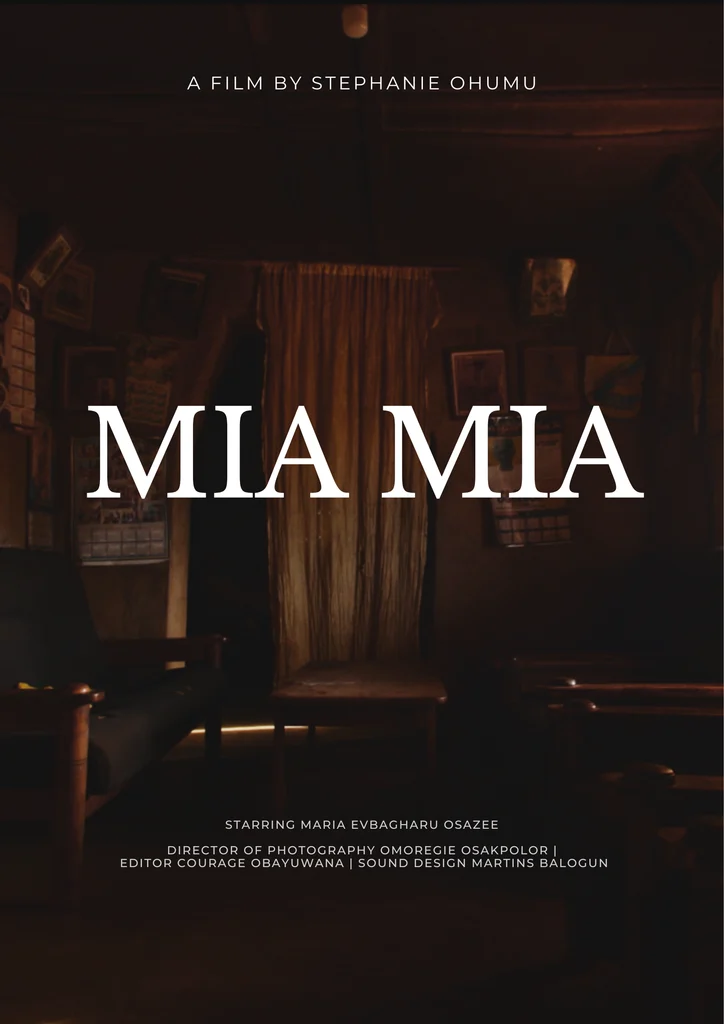
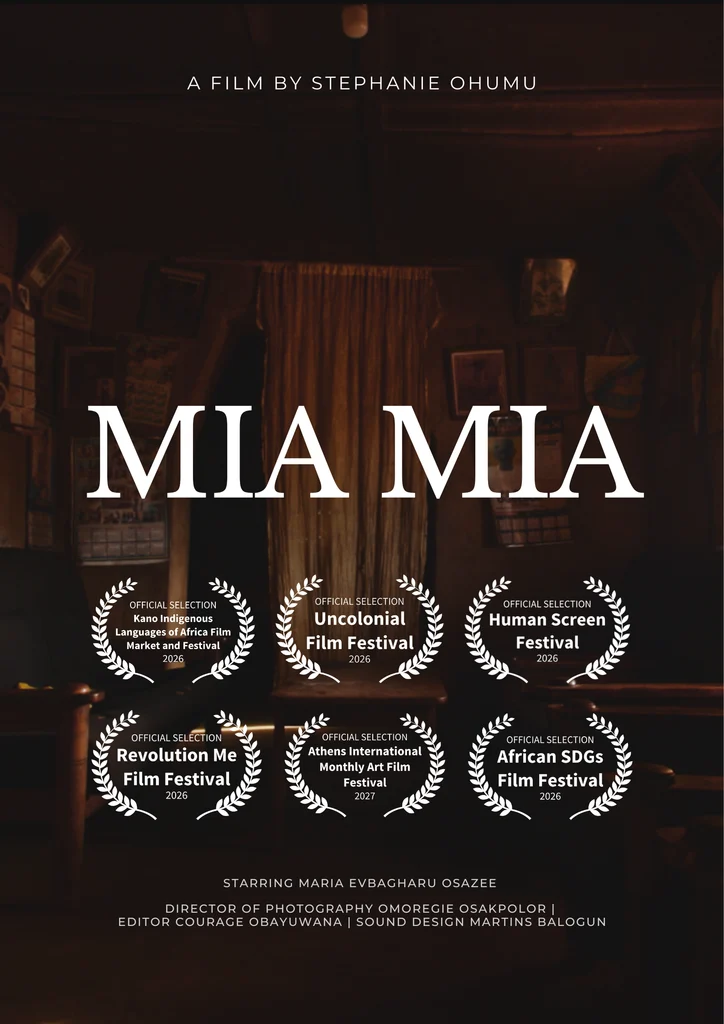
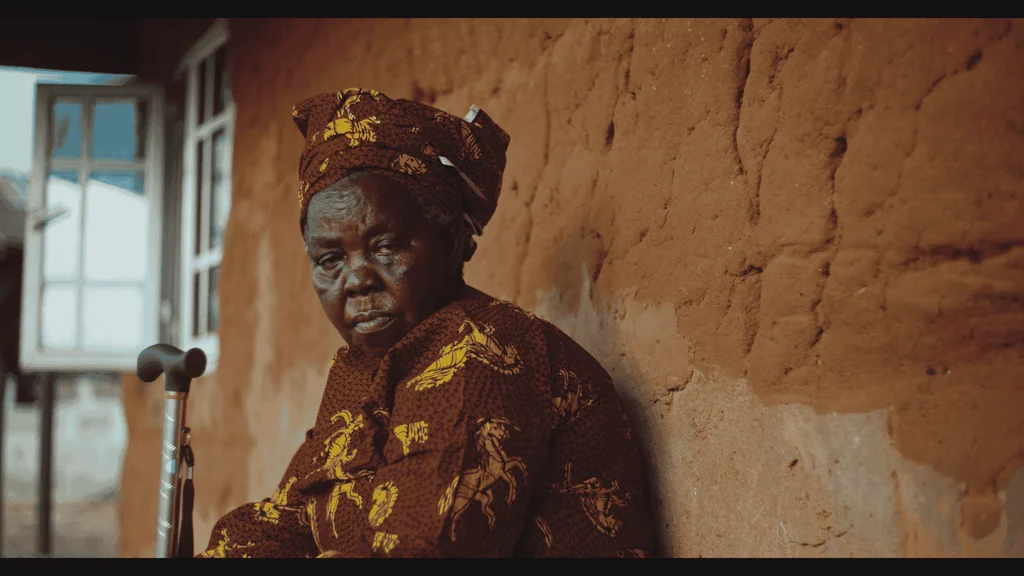
Ubini has interviewed about 20 people and transcribed more than 20 hours of recordings. It has also produced Mia Mia, a 27-minute documentary featuring Maria Evbagharu Osazee, an 85-year-old woman reflecting on her life and the cultural loss she has witnessed.
The gap in African-language data
Africa has more than 2,000 languages, but few have the digital resources needed for natural language processing. Many are underrepresented in AI training datasets, leaving developers with little material to build tools that understand or communicate in languages such as Edo.
A 2026 study by Kedir Hussen and six other researchers, published in the Proceedings of Machine Learning Research, examined large and small language models’ support for African languages. It identified 41 African languages supported by the models and 23 publicly available datasets, finding that more than 98% of African languages were unsupported.
Ohumu said tests of existing AI models showed that their Edo responses could sound convincing while containing inaccurate translations.
“Claude can write a convincing enough cosplay of Edo, but it fills it with a lot of nonsense,” she said. “It’s really dangerous because if you don’t know the language, you wouldn’t know that.”
In one example, a model translated “download” as “D-A-N-L-O-D”, reproducing an English pronunciation instead of providing an Edo equivalent. Ohumu described it as a parody of how an Edo speaker might pronounce the word.
She attributes such errors partly to the limited Edo material available online.
“I’ve done extensive research on this, and there’s probably stuff I haven’t seen yet,” she said. “The largest one is, oddly enough, Jehovah’s Witness. They have translations of the Bible and other devotional books in the language.”
Some existing materials, she found, were also heavily influenced by English. “It’s like seeing Pidgin English being passed off as English. So there’s a lot of Anglicising happening,” she said.
For Ohumu, language loss also erodes vital knowledge. She recalled reading a study about indigenous communities where understanding of a plant’s medicinal value existed in only one language.
“So when that language goes extinct, our understanding of what that plant can do as well dies,” she said.
The shortage of reliable data also affects AI development. Edo is tonal, so differences in tone markings can change a word’s meaning. Models trained on incomplete or inaccurate material risk reproducing errors in translations and generated speech.
Ohumu believes a reliable Edo dataset could support practical applications, including voice-based services for people more comfortable communicating in the language. She cited financial services that would let market women carry out banking transactions through audio commands in Edo.
Such applications depend on verified language data—the precise gap Ubini is setting out to address.
Building an archive
The decision to focus on Edo is both personal and practical. Ohumu said she grew up in Benin City and has community connections across Edo State, giving Ubini access to people with specialised knowledge and making it easier to organise recordings without the cost of entering an unfamiliar market.
The company focuses on people over 70 years old who speak Edo as their first or main language, capturing everyday conversations, ceremonial speech and knowledge no longer widely shared. Its current collection covers people’s life experiences and food, including recipes, ingredients and the stories behind particular meals.
“We want everyday speech, but we also really want ceremonial speech as well,” Ohumu said. “And we also really want knowledge that is already outside of the mainstream.”
Ubini deliberately seeks diverse contributors to avoid disproportionately representing particular backgrounds, dialect groups or communities. For its current food collection, it is concentrating on women, who Ohumu said have historically been responsible for much of the cooking. Future collections will cover bead-making, traditional guilds and wood carving.
Ohumu estimates that Ubini needs at least 250 individuals, with an average of two hours of recordings each, to capture a broader range of speakers and knowledge.
The company works in quarterly research sprints, selecting a subject for each collection before identifying potential contributors. Researchers approach people in communities where the team has existing connections, explain the project and seek their participation.
Consent is central to the process. “It makes no sense to be documenting your culture if you’re going to be disrespectful to the custodians of it,” Ohumu said. “Sometimes people say no, and you have to leave it at that.”
Researchers also record contributors’ ages, occupations and backgrounds to establish whose knowledge the archive represents.
After the interviews, researchers manually transcribe conversations in Edo and translate them into English.
“Edo is a tonal language, so depending on where you put the markings, the meanings can differ greatly,” Ohumu said. Each initial transcription undergoes quality assurance by two University of Benin professors, who review and correct the text.
Finding people proficient in written Edo has proved difficult. Fluency in speaking the language does not necessarily translate into accurate writing, while automated tools such as Whisper and Granola have fallen short.
“The transcription is a lot harder than I thought it would be,” Ohumu said. “I knew it was going to be difficult because our languages are oral. It means that even people who have a very high proficiency in it cannot write it.”
Ubini currently has three transcribers working with its lead researcher, Elliot. The team also searches for out-of-print books and visits university libraries to study Edo grammar, word origins and spelling conventions.
Ohumu had expected a larger pool of people proficient in written Edo. Although she had read about a state government initiative to train young people to write the language, she discovered it had been discontinued.
“So that pipeline of people who are proficient in writing it wasn’t significantly built,” she said. “I do think that to scale, I will have to build this.”
She plans to train more transcribers as the project grows, particularly because poor initial drafts require repeated corrections before entering the archive.
Ubini aims to collect 50 hours of audio by December 2026. It hopes to have 150 hours transcribed and translated by the end of 2027, supported by 30 transcribers, and to build a 250-hour corpus by 2029.
The finished material is organised into XML files containing speaker turns, Edo transcriptions, English translations and information about contributors and recording contexts. Ohumu eventually wants to include phonetic transcriptions, but for now, her priority is documenting the language while its most fluent speakers are still alive.
“The first bit is just finding the people who speak it before they die and getting it out in a machine-readable version,” she said.
From language data to stories
For Ohumu, preserving Edo is only the beginning of Ubini’s ambition. She believes the language holds cultural knowledge and stories that can be developed into films, books and other media products
“The entire point of the company is this thesis: I think that within my language and all of the knowledge that it holds, there’s a repository of media IP,” she said. “It’s insanely valuable. And I think it’s untapped.”
She compares the opportunity to South Korea before K-dramas and K-pop gained international popularity, believing Edo culture holds stories that could reach wider audiences if developed and told well.
Ubini has begun exploring that possibility with Mia Mia, a 26-minute documentary about Maria Evbagharu Osazee, an elderly Edo speaker who reflects on the cultural changes she has witnessed throughout her lifetime. The film’s title is an Edo expression meaning “to forget”.
Ohumu said the documentary emerged from a research visit to a village to document Osazee’s knowledge.
“We were in the community to talk to the woman and her story was amazing, and I was like, okay, let’s make a film out of this,” she said.
Mia Mia premiered at the Uncolonial Film Festival in Germany in August 2026 before being selected for the Human Screen Festival in Tunisia in November, where it had its African premiere. It is also scheduled for its Nigerian premiere at the Kano Indigenous Languages of Africa Film Market and Festival later in November.
The film also enriches Ubini’s archive, with raw footage—including conversations excluded from the final cut—added to the dataset. The material serves two purposes: preserving the language and providing source material for creative work.
“The creative economy bits can’t be a thing that happens when we have a large enough corpus that makes sense,” she said. “It has to happen as we are doing it. And I think that one of the entry points that has the least barrier to entry is food.”
For Ohumu, the opportunity lies in developing stories from a culture she believes mainstream media has underrepresented. “I’m not building an app, I’m building stories, stories that don’t currently exist because we’re not speaking the language the way we should and the way they are stored,” she said.
Finding a sustainable model
Ohumu sees licensing Edo-language data as Ubini’s quickest route to revenue, but believes media products will provide more sustainable income in the long run.
“I do think that licensing is the lower-hanging fruit. Absolutely,” she said. “But I do think that the bulk of the sustainable funding will come from media products, whether that be selling a strong enough story to Netflix or Prime or EbonyLife, or developing it ourselves.”
Ubini has been self-funded since it began in 2024. Keeping costs down has depended on building within her existing networks and areas of experience.
“If you build at home and if you build around your circle of competence and if you build in industries where you’ve stayed for a bit, it really cuts down the cost,” she said.
Yet the project is reaching a point where that approach is becoming harder to sustain. The biggest expense so far has been transcribing and verifying the recordings.
“All that we’ve done so far, I can comfortably fund, but we’re starting to reach the point where it’s not as comfortable anymore,” Ohumu said. “The really expensive layer has been transcription and that QA process, to be very honest with you.”
She is now seeking funding to expand Ubini’s work. Whatever form it takes, she wants capital that gives the project room to grow without pressure for immediate returns.
“I’ll have non-equity diluting 200k. That’s important to me. Or even if it is an investment instead of a donation, it’ll be patient money. There’s no other way this works,” she said.
Over the next year, Ohumu plans to expand the team, improve transcription quality, and collect and transcribe an additional 100 hours of audio as Ubini works towards its 2027 and 2029 corpus targets.
For Ohumu, however, the work is bigger than the prospect of building a profitable company. She said she would continue preserving Edo even if Ubini never made money.
“Even if this company doesn’t make one naira, I’m still going to do this anyway,” she said. “That’s how strongly I believe in it.”
Source: